
A torn or loose porch screen does not always mean the whole enclosure must be replaced. The right solution depends on where the damage is, how much of the porch is affected, and whether the frame and screen-retention system are still sound.
The practical choices usually fall into four groups:
- A limited repair to one damaged area or component
- Rescreening one or more otherwise serviceable openings
- Replacing damaged framing, track, cap, spline, fasteners, or door components while retaining the rest of the system
- Replacing or upgrading the screen system when repairs would not solve the underlying problem
Photos can often help Best Screens begin the evaluation remotely. After reviewing them, we may ask more questions or schedule an onsite visit before recommending a final scope.
The short version: If the frame and retention system are sound, damaged mesh can often be rescreened. If the framing, track, wood, attachment surface, or layout is failing, repairing only the mesh may not last or may leave openings for insects.
Start by identifying what is actually damaged
Screen mesh is only one part of a porch enclosure. Depending on the system, the mesh may be retained with round spline, flat spline, a system-specific cap and base, or staples concealed under wood trim.
Best Screens uses round spline with rolled-aluminum removable screen frames, vinyl screen doors, wood screen doors, some storm-door screen panels, Screen Tight, and some older extruded-aluminum systems.
Best Screens uses flat spline with all the current extruded-aluminum systems and components it carries: ½ × 1-inch ARC, standard 1 × 2-inch and 2 × 2-inch enclosure members, Eze-Breeze track, PCA screen doors, and EZ Screen Room. The spline type and size must match the actual channel, mesh, and system; round and flat spline are not interchangeable simply because both retain screen mesh.
Look for damage in four places:
- Mesh: tears, holes, fraying, whitening as the charcoal coating wears away, stretched areas, waves, or sag
- Retention: loose or missing spline, displaced cap, damaged track, exposed staples, or mesh pulling away at an edge
- Framing: bent, loose, corroded, cracked, separated, or poorly attached members
- Supporting structure: deteriorated trim, rot, movement, water damage, or an opening that is no longer square
The same visible symptom can have different causes. A loose edge may need new mesh and spline, or it may indicate a damaged groove, failed cap, movement in the framing, or an incompatible mesh-and-retention combination. Best Screens evaluates the complete opening instead of diagnosing the cause from one close-up photograph.
When spline pulls out and the screen comes loose
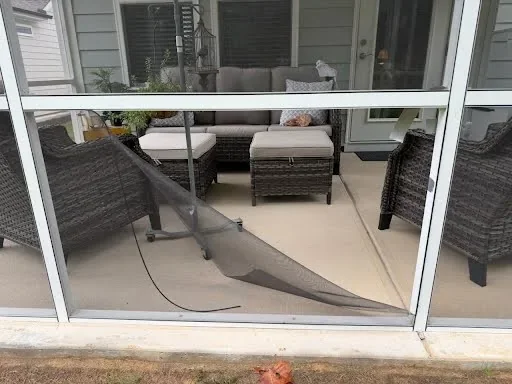
When spline pulls out of its channel, the screen may hang loose even though the mesh is not torn. In some cases, the technician can position the mesh and roll the spline back into the channel. That repair is practical only when the mesh remains serviceable, enough material still reaches the channel, and the spline and channel can hold it securely.
The mesh may have shrunk, lost usable edge material, or originally been installed under so much tension that it cannot be stretched back into the channel. If it no longer reaches without excessive tension—or if it is brittle, distorted, or damaged—the mesh in that opening must be replaced.
The technician must also determine why the spline released. The original spline may be the wrong type or too small for the channel-and-mesh combination. Older spline can harden or shrink and lose its ability to grip. In those cases, the spline should be replaced. A larger spline may be appropriate when it correctly fits the channel and mesh and provides the needed holding power; the technician should not increase the size without confirming that fit.
When a limited repair may make sense
A limited repair may be reasonable when the problem is confined to a small area, the surrounding mesh remains serviceable, and the frame and retention system are sound. Examples can include an individual loose component, a damaged fastener, a door-hardware issue, or one opening that can be rescreened independently.
Best Screens does not install small adhesive or sewn mesh patches. A homeowner may choose a do-it-yourself patch to save money or temporarily cover a small opening while waiting for a complete rescreen, but patches are normally visible and may not provide the appearance or durability of replacing the mesh in the complete affected opening.
When rescreening is usually the better choice
Rescreening means removing the old mesh from an opening and installing new mesh while retaining serviceable framing or the existing screen-system base.
It may be the practical choice when:
- One or more openings have tears, holes, loose edges, or sagging mesh
- Charcoal-coated fiberglass mesh has become brittle or visibly whitened as its dark vinyl coating wears away and exposes the lighter fiberglass beneath it
- Damage is spread across several areas rather than confined to one point
- The frame or system remains secure, straight, and usable
- The homeowner wants to change mesh for visibility, small insects, pets, durability, or solar control
- A mismatched repair would be more noticeable than replacing the mesh in the complete opening
Rescreening does not automatically correct damaged framing, weak attachment surfaces, or a failing retention system. Those conditions must be repaired or replaced as part of the scope when necessary.
Spline is evaluated during the work. Old, worn, damaged, incorrectly sized, or unsuitable spline is replaced; serviceable spline may sometimes be reused when the system and installation allow it. The final selection must fit the channel and mesh rather than following one universal size or reuse rule.
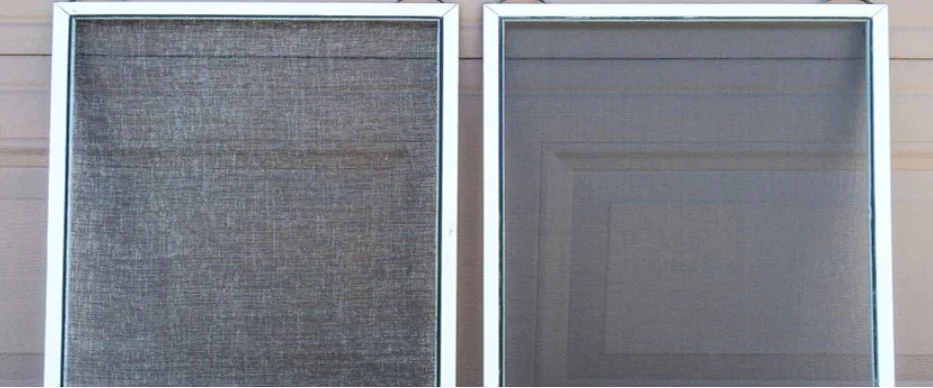
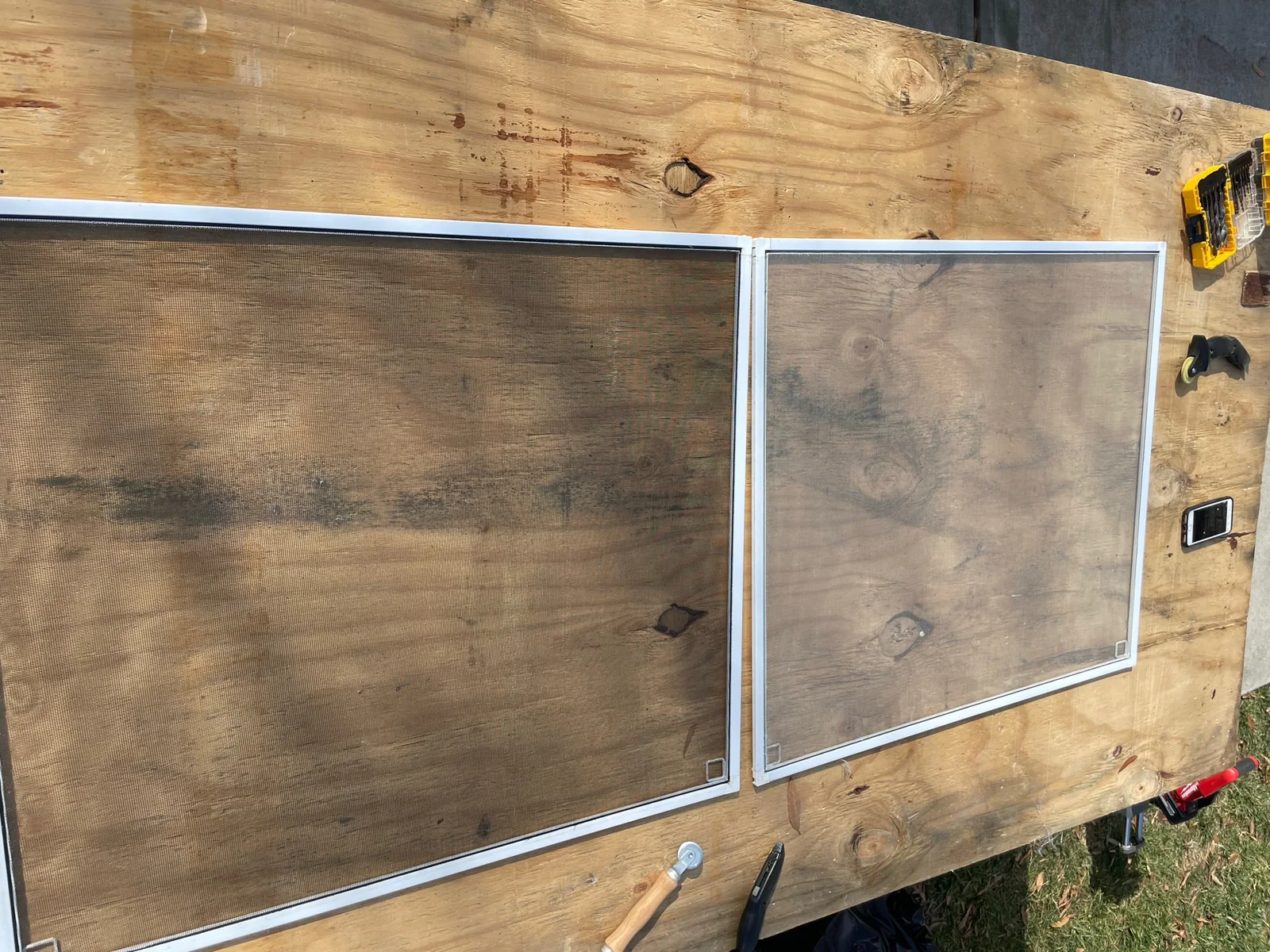
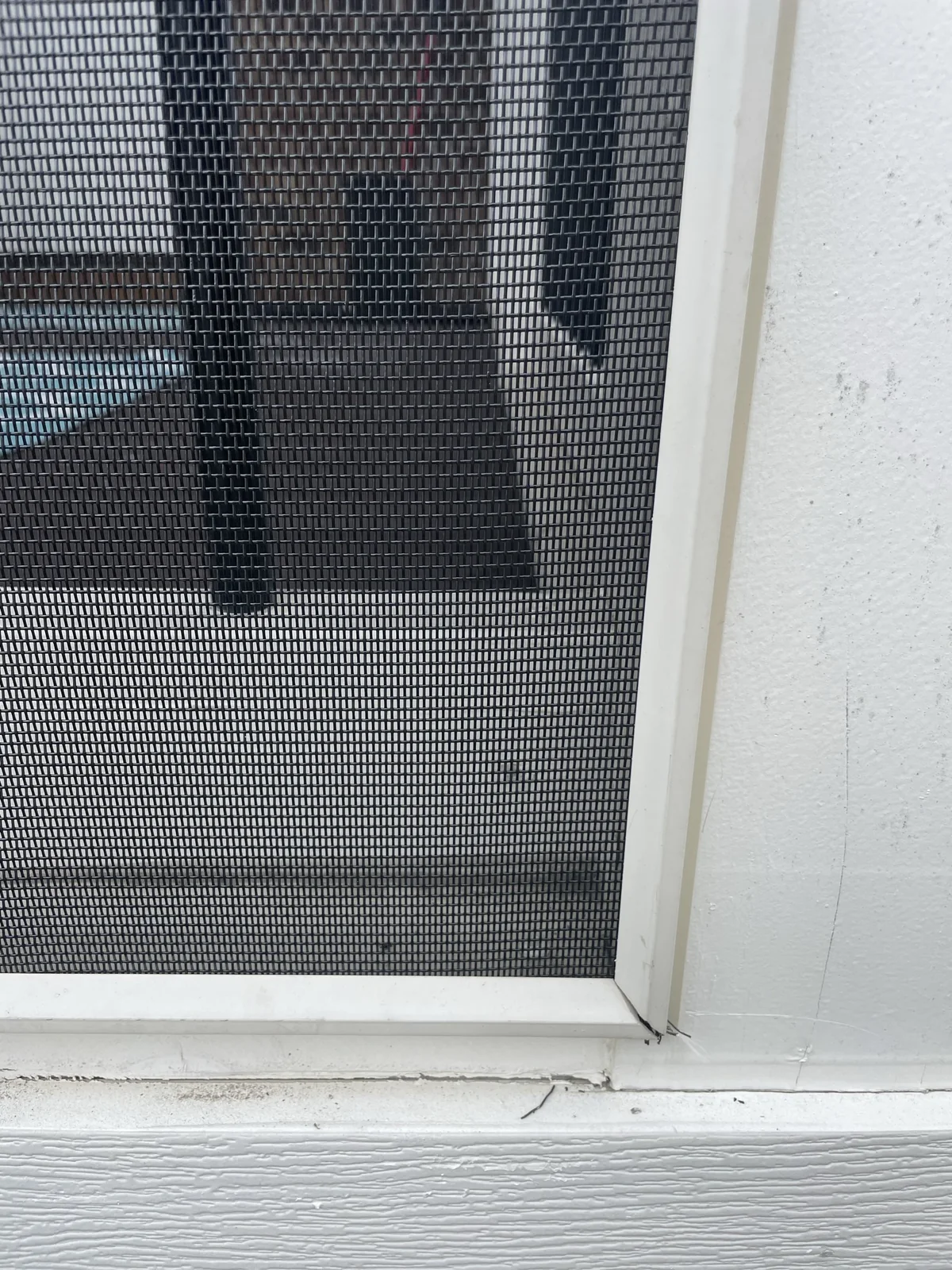
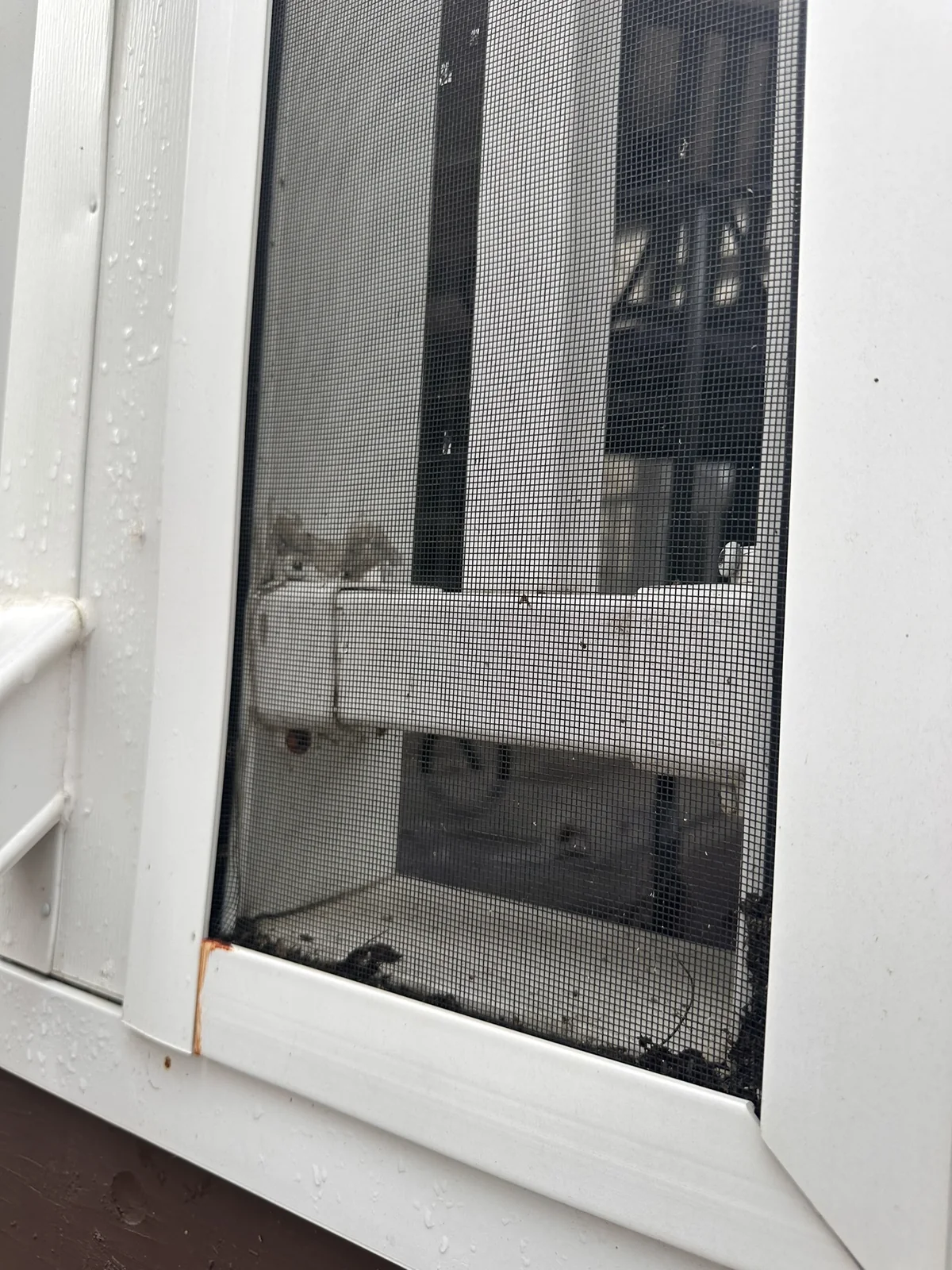
These photographs show what can happen as charcoal-coated fiberglass screen mesh wears. The dark vinyl coating wears away and exposes the lighter fiberglass within the mesh, creating a white or gray appearance. As this deterioration progresses, the mesh becomes more brittle and more likely to tear or fail during handling or continued use.
When part of the system may need replacement
Sometimes the mesh is only part of the problem. A localized system repair may involve a damaged extrusion, removable-panel frame, track, base, cap, spline channel, fastener, rail component, or door part.
Replacing the affected member or component can make more sense than replacing the entire enclosure when the rest of the installation is sound and compatible parts are available. The final scope depends on whether the repaired section can align, attach, drain, retain the mesh, and match the surrounding system well enough to perform properly.
New work may not exactly match materials that have weathered in place. Mesh is usually the most noticeable difference. On worn charcoal-coated fiberglass mesh, loss of the dark vinyl coating can expose lighter fiberglass and make the old material appear white or gray beside new charcoal mesh. Spline generally creates less of a visible contrast. Rolled-aluminum framing can accumulate heavy dirt or oxidation, so a new frame member may also look different beside existing material. Best Screens evaluates appearance with the repair scope but cannot make new material look weathered.
When full replacement or a system upgrade may be more practical
Replacing the screen system may be more practical when:
- Framing is widely bent, loose, corroded, separated, or poorly attached
- The mesh-retention track or cap has failed across many openings
- Supporting wood is deteriorated or cannot hold the existing system securely
- Repeated repairs have not corrected the underlying movement or attachment problem
- The current layout does not accommodate the desired door, rail, pickets, panel size, or mesh
- A heavier mesh is not compatible with the existing frame or retention method
- The enclosure needs so many separate repairs that replacing the existing system would provide a better long-term solution
Replacement does not always mean rebuilding the porch structure. It may mean changing the screening components while keeping suitable roof, columns, walls, and other sound construction. Best Screens must inspect the actual conditions before defining what can remain.
The existing screen system changes the repair
Stapled screening with trim
Mesh is fastened to wood and the attachment is covered with trim. Repairs may require removing and replacing trim to access the mesh. The condition of the wood matters because deteriorated material may not hold new fasteners reliably.
Screen Tight or another cap-and-base system
The mesh is retained by a system-specific base, round spline, and cap arrangement. On Screen Tight installations, the cap and round spline often remain serviceable because they have been protected from direct sunlight, while the base is more likely to become brittle and require replacement. Screen Tight components can generally be purchased individually, allowing Best Screens to replace the pieces the project needs. Best Screens checks the condition of each part and confirms that available replacement pieces will work with the existing system.
SCREENEZE
SCREENEZE uses an aluminum base and cap system. Its caps normally do not need replacement during rescreening. If a cap or another SCREENEZE component is damaged, replacement is an additional charge. SCREENEZE parts may need to be purchased as a larger component or complete set rather than as a single small replacement piece, so material cost may not be limited to only the visibly damaged part.
Removable aluminum panels
Each rolled-aluminum framed panel can be removed for service and normally uses round spline to retain the mesh. A damaged panel may be rescreened or rebuilt independently if its frame, corners, and retention hardware allow it.
Extruded-aluminum enclosures
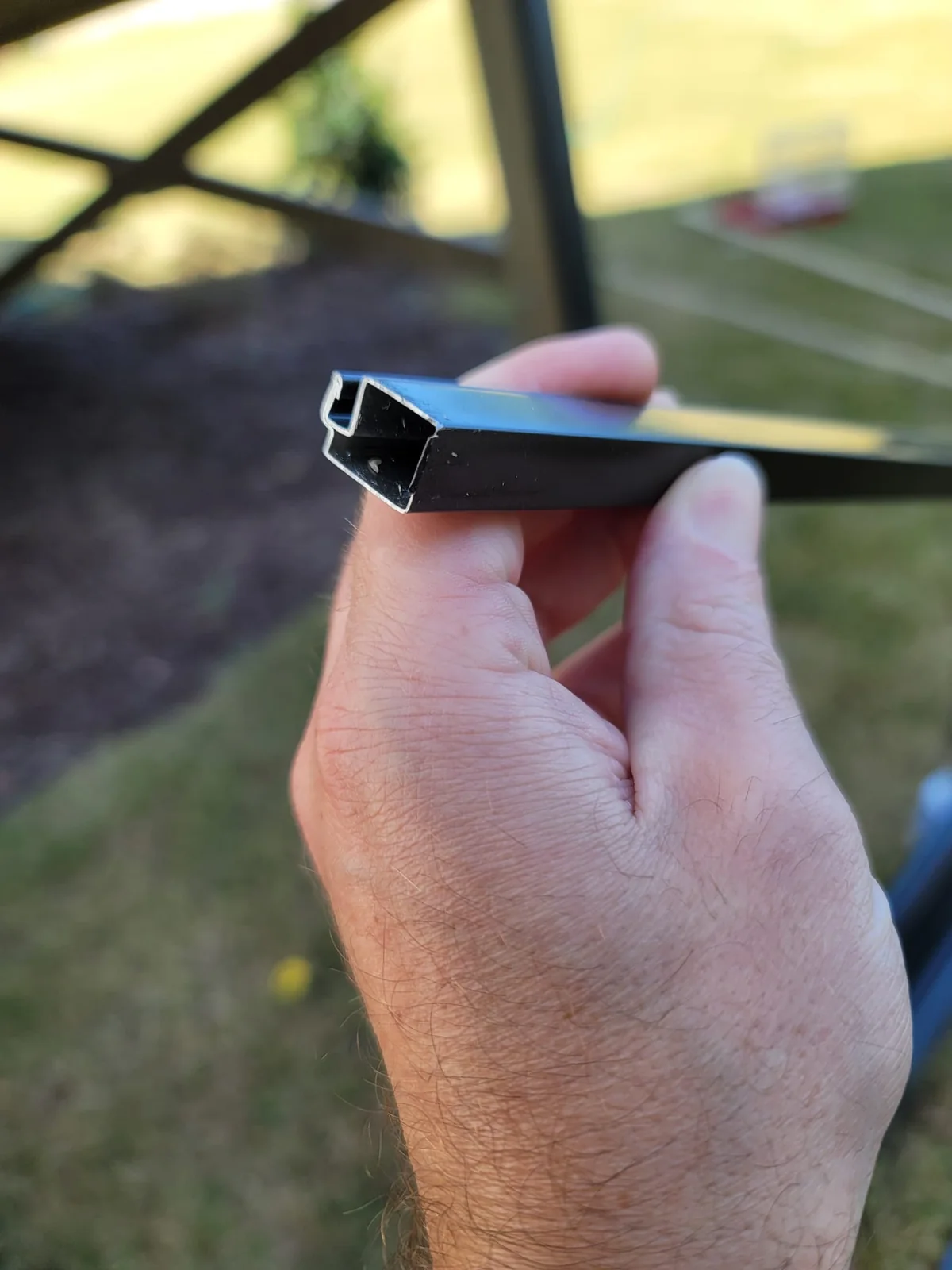
The current extruded-aluminum systems and components Best Screens carries use flat spline in channels formed in the aluminum members. This includes ½ × 1-inch ARC, standard 1 × 2-inch and 2 × 2-inch enclosure framing, Eze-Breeze track, PCA screen doors, and EZ Screen Room. Some older extruded-aluminum systems use round spline, so the existing channel must be identified before repair materials are selected. The assessment should include the extrusion, groove, spline, fasteners, rail/door framing, and the condition of the structure receiving the enclosure.
For a full comparison of these systems, see SCREENEZE vs. Stapled Screening vs. Removable Aluminum Panels vs. Extruded-Aluminum Enclosures.
Mesh choice can change the repair plan
Standard porch mesh, no-see-um mesh, visibility mesh, polyester durability products, PetScreen, and solar fabrics differ in thickness, weight, airflow, and the tension they can accept.
A stronger or heavier mesh is not automatically compatible with every frame, groove, cap, or opening size. The existing system must be able to retain the selected fabric without damaging the frame or creating an unreliable fit. Best Screens selects spline or system components for the actual groove, fabric, opening, and field conditions rather than treating one size as universal.
See How to Choose the Best Screen Mesh for Your Home for the detailed mesh comparison.
What to photograph for a remote review
Most screen-porch repair projects can begin with good photographs. Send:
- Wide photos of every side of the porch
- A view from inside and outside when accessible
- Close photos of every damaged area
- Close views of the screen edges, corners, track, cap, spline, or trim
- The full door and its frame when the problem involves a door
- Photos showing loose, bent, cracked, corroded, or deteriorated framing or wood
- One photo from farther back that shows where each close-up belongs
- Approximate measurements if convenient
Customer measurements can help with preliminary quoting but are not used for fabrication. After reviewing the photos, Best Screens may ask follow-up questions or schedule an onsite evaluation.
Use the Best Screens estimate form when possible because it is the first place the team checks regularly. The form accepts up to 10 JPEG, PNG, or WebP photos, no more than 15 MB each. Photos may also be sent by email to contact@bestscreens.com, by text or WhatsApp to 919-335-3439, or through Best Screens on Facebook.
For a complete photo checklist, see What We Need for Your Porch or Window-Screen Estimate.
Safety, rails, and supporting conditions
Ordinary insect screening is not fall protection, a guard, a security barrier, or a storm-rated assembly. A tear, loose panel, damaged rail, failed attachment, or deteriorated supporting surface should not be treated as only a cosmetic concern when people or pets could contact it.
Repair recommendations may also depend on rail/guard conditions, access, opening size, door placement, manufacturer requirements, permits, or applicable code. Best Screens can identify the proposed screen-work scope, while the authority having jurisdiction controls official code and permit decisions.
Workmanship warranty and damage outside the warranty
Best Screens warrants work it performs for one year when that work has not been altered and has not been damaged by pets, impact, weather, misuse, work by others, or another cause outside Best Screens’ control.
Frequently asked questions
Can one torn porch-screen opening be replaced without rescreening the whole porch?
Often, yes, when the opening is independently retained and the surrounding framing and system are serviceable. Color and appearance may differ between new and weathered mesh.
Can loose screen simply be pushed back into the spline channel?
Sometimes the mesh and spline can be rolled back into the channel, but only when the mesh remains serviceable and still reaches the channel without excessive tension. If the mesh has shrunk, become brittle, or cannot be repositioned, it must be replaced. Hardened, shrunken, undersized, or otherwise unsuitable spline should also be replaced with the type and size that correctly fits the mesh and channel.
Does sagging mesh always mean it was installed incorrectly?
No. Mesh type, opening size, frame movement, retention-system condition, weather, impact, age, and other conditions can affect appearance and tension. A photograph alone may not establish the cause.
Can I change mesh during a rescreen?
Often, but the proposed mesh must be compatible with the opening, frame, groove, retention system, and expected use. Heavier mesh is not suitable for every system.
Will Best Screens repair rotten wood behind a screen system?
Best Screens performs most repairs involving rot related to the screen porch itself, but the extent and cause of the damage must be evaluated case by case. The quote will identify the work Best Screens can include and any supporting or structural repairs that must be addressed separately before screening work proceeds.
Does Best Screens install small screen patches?
No. Homeowners may use a do-it-yourself patch to save money or temporarily cover a small opening while waiting for a rescreen, but Best Screens normally replaces the mesh in the complete affected opening when performing mesh work.
Can Best Screens estimate a porch rescreen from photos?
Most projects can begin with good photos. Best Screens may ask more questions or schedule an onsite visit after reviewing them.