
The best screen mesh is not simply the strongest, darkest, finest, or most expensive option. It is the material that fits the way you want to use the space.
A homeowner trying to preserve a wooded view may value openness and optical clarity. A coastal homeowner dealing with biting midges may accept a tighter weave to keep out smaller insects. A family with a dog may need resistance to claws and pushing. A hot west-facing porch may benefit from solar control, even though greater shade and privacy reduce airflow.
Best Screens works with Phifer screen fabrics for windows, doors, porches, and compatible enclosure systems. This guide explains the practical tradeoffs among the meshes we commonly quote. Availability, roll width, opening size, attachment system, spline, exposure, and intended use must still be checked for each project.
The short version: Start with the problem you most need the screen to solve—ordinary insects, tiny insects, visibility, wear, pets, or sun—and then check what you are willing to trade in airflow, view, weight, and cost.
First, mesh and the installation system are separate decisions
The mesh is the woven fabric that affects insect protection, visibility, airflow, durability, shade, and privacy. The installation system is the method that tensions and holds that fabric: staples and trim, an applied track, removable aluminum panels, EZ Screen, ARC, or standard extruded-aluminum framing.
A fabric that performs well in one installation may be too thick, stiff, heavy, or wide for another system or opening. The installer must match the mesh, spline or cap, frame profile, opening dimensions, exposure, and retention method. Choosing PetScreen, TuffScreen, or SunTex does not by itself determine how the porch should be framed.
For a comparison of the construction methods, see SCREENEZE vs. Stapled Screening vs. Removable Aluminum Panels vs. Extruded-Aluminum Enclosures.
Related guide: Flexible Vinyl vs. Acrylic vs. Glass Porch Windows.
Quick comparison
| Mesh | Best starting use | Construction / color offered by Best Screens | Main advantage | Main tradeoff |
|---|---|---|---|---|
| Standard 18×14 | Most porches | Vinyl-coated fiberglass; charcoal | Familiar balance of airflow, insect protection, strength, and cost | Not intended for tiny no-see-ums or pet abuse |
| Window screen 18×16 | Window screens | Vinyl-coated fiberglass; charcoal | Smaller openings than 18×14 for household windows | Thinner and not Best Screens’ porch choice |
| Standard No-See-Um 20×20 | Smaller biting insects | Vinyl-coated fiberglass; charcoal | Tighter weave helps keep out most tiny insects | Less open than standard porch mesh |
| BetterVue | A clearer view at a moderate upgrade | Vinyl-coated fiberglass; black | Better visibility and airflow than traditional fiberglass | Thinner fabric is not a heavy-duty mesh |
| UltraVue2 | Maximum outward visibility | Black; material composition not stated in this guide | Slightly thinner than BetterVue with slightly better visibility in Best Screens’ field comparison | The installed difference from BetterVue can be difficult to see |
| TuffScreen | High traffic and added durability | Vinyl-coated polyester; black | Three times stronger than standard fiberglass, according to Phifer | Thicker and more visible than view-focused mesh |
| TuffScreen No-See-Um | Tiny-insect protection plus durability | Vinyl-coated polyester; black | Combines a tight weave with heavy-duty performance | Tighter weave reduces openness compared with ordinary TuffScreen |
| PetScreen | Dogs, cats, and demanding wear areas | Vinyl-coated polyester; Best Screens normally quotes black | Thick, tear- and puncture-resistant pet mesh | Heavier appearance and more airflow/view loss than standard mesh |
| SunTex 80 | Shade and daytime privacy with a more moderate airflow tradeoff | Vinyl-coated polyester; Best Screens normally quotes black | Solar control with approximately 25% openness | Considerably less open than insect screen |
| SunTex 90 | Maximum shade and stronger daytime privacy | Vinyl-coated polyester; Best Screens normally quotes black | Denser solar fabric with approximately 10% openness | Significant airflow reduction; smoke and other odors may linger |
This table is a decision aid, not a promise that every fabric fits every opening or retention system.
Detailed mesh comparison chart
The rankings below are homeowner decision aids based on Phifer's published product descriptions and Best Screens' field experience. They are not one standardized laboratory test. For shade/privacy, 1 means little added shade or privacy and 5 means the strongest daytime effect. For durability, 1 means ordinary fiberglass performance and 5 means the heaviest pet-resistant option. For visibility, 1 means the mesh is visually prominent and 5 means the clearest outward view. Lighting, tension, background, cleanliness, opening size, and installation quality can change what a customer sees.
| Mesh | Opening / weave information | Material and Best Screens color | Shade / daytime privacy | Practical durability | Outward visibility | Water Shed Technology | Microban | Other differences |
|---|---|---|---|---|---|---|---|---|
| Standard 18×14 | 18×14 strands per inch; relatively open porch weave | Vinyl-coated fiberglass; charcoal | 1/5 | 1/5 baseline | 3/5 | No | No published claim found | Best Screens' lowest-cost and most common porch mesh; good general airflow |
| Window screen 18×16 | 18×16 strands per inch; smaller openings than 18×14 | Vinyl-coated fiberglass; charcoal | 1/5 | 1/5 | 3/5 | No | No published claim found | Best Screens reserves it for windows; slightly thinner than 18×14 |
| Standard No-See-Um 20×20 | 20×20 strands per inch; tight fiberglass weave | Vinyl-coated fiberglass; charcoal | 2/5 | 1/5 | 2/5 | No | No published claim found | Helps stop most no-see-ums, gnats, and sand flies; less open than 18×14 |
| BetterVue | Proprietary view-focused weave; Phifer does not publish an aperture size on the current page | Vinyl-coated fiberglass; black | 1/5 | 1/5 | 4/5 | Yes | No published claim found | Better view and airflow than traditional fiberglass; hydrophobic coating sheds water, dirt, and grime |
| UltraVue2 | Proprietary high-openness weave; Phifer does not publish an aperture size on the current page | Black; material composition not stated in this guide | 1/5 | 1/5 | 5/5 | Yes | No published claim found | Slightly thinner than BetterVue with slightly better visibility in Best Screens’ field comparison; the installed difference can be difficult to see |
| TuffScreen | Proprietary insect-screen weave; Phifer does not publish an aperture size on the current page | Vinyl-coated polyester; black | 1/5 | 4/5; Phifer states 3× standard fiberglass | 2/5 | No | Yes, shown on current Phifer product materials | High-traffic, tear-, puncture-, and pet-resistant screen; published 10-year material warranty |
| TuffScreen No-See-Um | Proprietary tight small-insect weave; no aperture size published | Vinyl-coated polyester; black | 3/5 | 4/5 | 2/5 | No | Yes, shown on current Phifer product materials | Combines small-insect protection, added durability, and some daytime privacy; published 10-year material warranty |
| PetScreen | Proprietary heavy pet-resistant weave; Phifer publishes about 36% openness | Vinyl-coated polyester; Best Screens stocks black | 2/5 | 5/5; older Phifer literature states 7× ordinary insect screen | 1/5 | No | Yes, shown on current Phifer product materials | Thickest pet-focused option; tear and puncture resistant, not indestructible |
| SunTex 80 | Phifer publishes about 25% openness and about 75% UV blockage | 31% polyester / 69% vinyl on polyester; Best Screens stocks black | 4/5 | 4/5 | 1/5 | No published claim | Yes | Blocks about 80% of sun's heat and glare; more airflow than SunTex 90; 10-year material warranty |
| SunTex 90 | Phifer publishes about 10% openness and about 90% UV blockage | 31% polyester / 69% vinyl on polyester; Best Screens stocks black | 5/5 | 4/5 | 1/5 | No published claim | Yes | Strongest shade/daytime privacy; major airflow reduction; 10-year material warranty |
“No published claim found” means the current Phifer materials reviewed for this guide do not advertise that feature. It does not prove that no product variation has ever included it. Manufacturer warranty terms, exclusions, proof-of-purchase requirements, and available remedies must be checked against the exact product and purchase date. A material warranty is separate from Best Screens' installation workmanship coverage.
What Best Screens stocks
Best Screens stocks all ten meshes rather than treating the specialty products as special-order-only choices.
- Except for 18×16 window screen, Best Screens stocks 72-, 84-, and 96-inch-wide × 100-foot rolls.
- Except for 18×16 and UltraVue2, Best Screens also stocks 108- and 120-inch-wide × 100-foot rolls.
- Selected products are stocked in 132-inch-wide × 100-foot rolls where that width is available.
- Best Screens stocks 18×16 only in 36-inch-wide × 600-foot rolls because it is reserved for window screens, which typically do not require wider material.
Stock can change, and the selected fabric still must be wide enough for the opening without an unintended seam.
Relative installed-price order
Excluding 18×16, which Best Screens prices and uses as a window-screen material rather than a porch option, the usual material-price progression from lowest to highest is:
- Standard 18×14
- BetterVue
- UltraVue2
- Standard 20×20 No-See-Um
- TuffScreen
- TuffScreen No-See-Um
- PetScreen
- SunTex 80
- SunTex 90
This order is a comparison guide, not a price quote. Roll width, waste, opening size, access, removal work, framing, retention system, spline, doors, and labor can change the installed project price.
Standard 18×14 porch screen
Standard 18×14 is Best Screens’ most common porch mesh and the lowest-cost porch option we provide. It is also the traditional choice used by many home builders and construction companies, often without presenting the homeowner with alternative fabrics.
The numbers describe the approximate count of strands in each direction of the weave. An 18×14 porch mesh has larger openings and a somewhat heavier construction than the 18×16 fiberglass screen commonly used in windows. Best Screens uses charcoal vinyl-coated fiberglass for this category.
Why homeowners choose it:
- It provides the familiar look of a traditional screened porch
- It keeps out most ordinary flying insects
- It allows good airflow
- It is suitable for many porch openings and attachment methods
- It is Best Screens’ entry-level mesh by cost
Its limits matter. Standard fiberglass is not designed for repeated pet clawing, hard impacts, or the smallest biting insects. If the porch receives unusual wear, sits near marshy or coastal insect habitat, or needs solar control, another mesh may solve the actual problem better.
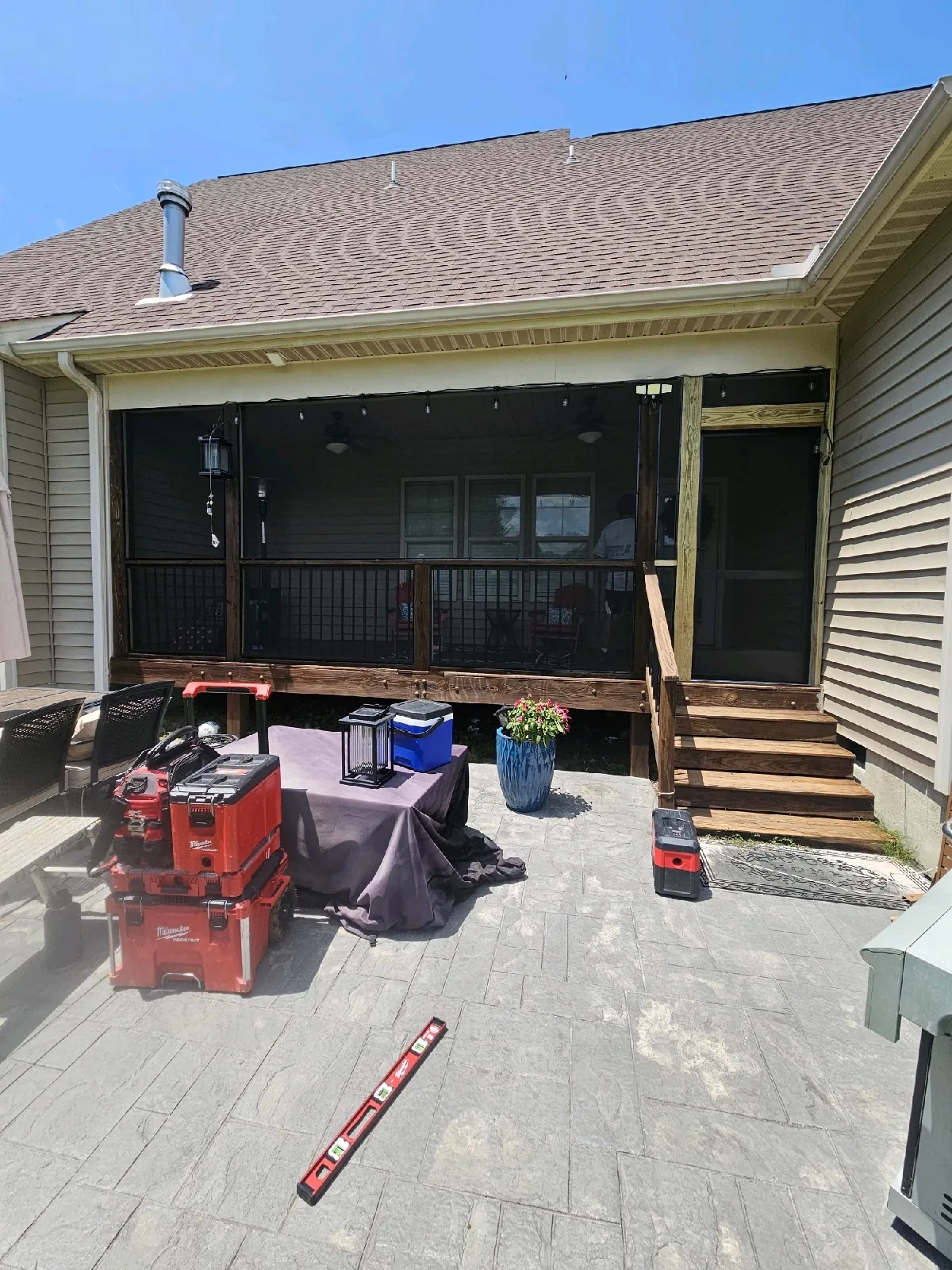
Why Best Screens reserves 18×16 fiberglass for windows
Standard 18×16 fiberglass has slightly smaller openings and is slightly thinner than 18×14 porch mesh. Some builders use it on porches because it can cost less, but Best Screens does not use it as its standard porch fabric.
Best Screens reserves 18×16 for window screens. Homeowners generally have less tolerance for an insect passing through a window opening into the house than entering an outdoor porch. The smaller mesh opening suits that use, while the somewhat heavier 18×14 product is a better fit for the additional handling and abuse common on porches.
An 18×16 count should therefore not be presented as an automatic upgrade over 18×14. The intended application, yarn diameter, fabric weight, opening, and exposure matter along with the mesh count.
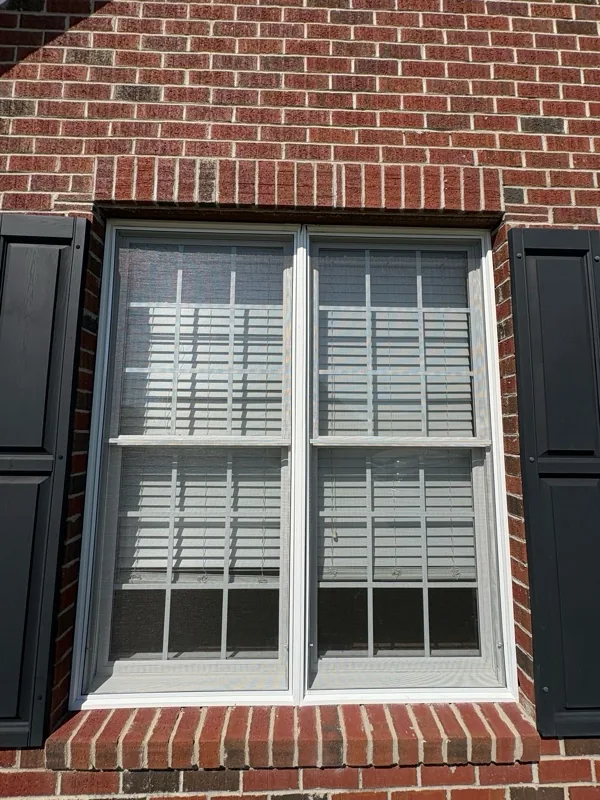
Standard 20×20 No-See-Um screen
Standard No-See-Um screen uses a tighter 20×20 weave to help keep out most smaller flying insects such as biting midges, gnats, and sand flies. Like Best Screens’ standard fiberglass choices, it is vinyl-coated fiberglass in charcoal.
The main benefit is smaller openings. The tradeoff is that a tighter weave is less open than ordinary porch screen. That can affect breeze and visual openness, although standard 20×20 remains a practical choice for customers whose first priority is small-insect protection rather than heavy-duty strength.
No screen should be promised to exclude every insect. The enclosure also depends on properly screened doors, sealed edges, intact framing, thresholds, penetrations, and openings elsewhere in the structure.
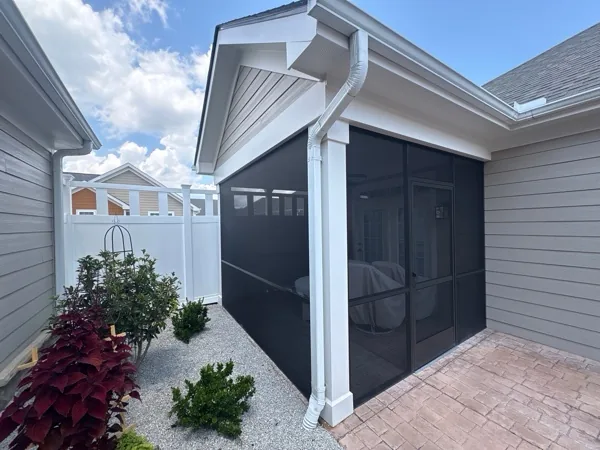
BetterVue for a clearer outward view
BetterVue is a black, thinner, vinyl-coated fiberglass screen designed to be less visually prominent than traditional fiberglass mesh. The black color and finer construction improve outward visibility, while greater openness supports airflow and natural light.
Current BetterVue also includes Phifer’s Water Shed Technology, a hydrophobic coating designed to shed rainwater and resist dirt and grime so the view clears more quickly during and after rain. The coating helps the screen remain cleaner; it does not make the porch waterproof.
BetterVue is a good starting point when the view matters and the homeowner does not need a heavy-duty or pet-resistant fabric. It should not be sold as equally durable to TuffScreen or PetScreen merely because it is a premium option; it solves a different problem.
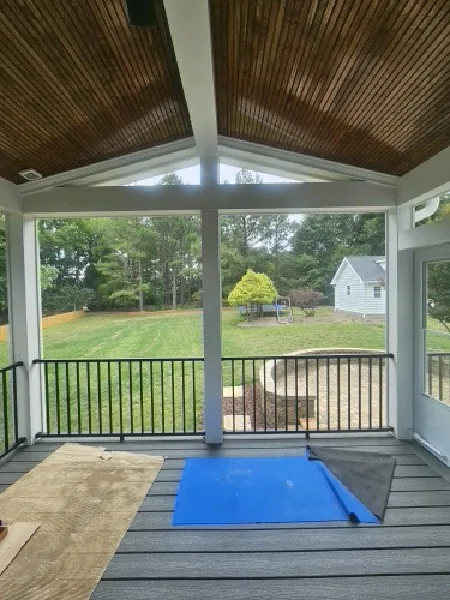
UltraVue2 when the view is the first priority
UltraVue2 is Phifer’s most view-focused screen in this group. It is black and thinner than conventional porch mesh, with high openness intended to maximize optical clarity and airflow. Like current BetterVue, it uses Water Shed Technology to repel water and resist dirt and grime.
In Best Screens’ field comparison, UltraVue2 is slightly thinner than BetterVue and provides slightly better visibility. The difference can be difficult to see once the mesh is installed because lighting, background, viewing angle, cleanliness, and tension can matter as much as the small product difference. Customers choosing between them should compare physical samples rather than expect a dramatic visual change.
Best Screens would start with UltraVue2 when preserving an important view is the customer’s main goal and the opening does not require a heavy-duty, pet-resistant, solar-control, or no-see-um fabric.
High visibility does not mean invisible under every condition. Screen visibility changes with lighting, viewing angle, background, reflections, cleanliness, tension, and whether the viewer is looking from the brighter side toward the darker side.
TuffScreen for high-traffic durability
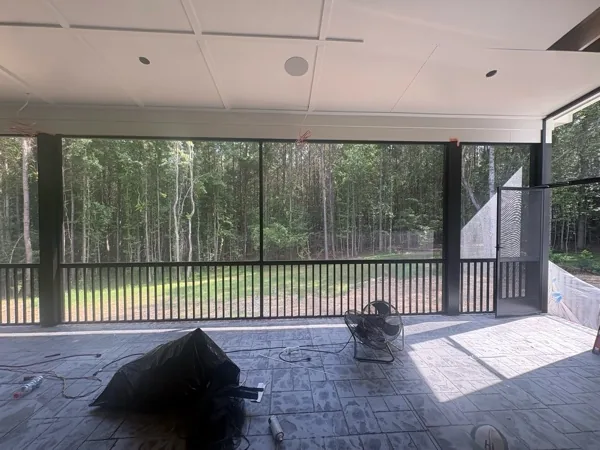
TuffScreen is black, vinyl-coated polyester mesh. It is a little thicker than standard 18×14 fiberglass and is intended for high-traffic areas, children, weather exposure, and customers who want added resistance to tears and punctures.
Phifer describes TuffScreen as three times stronger than standard fiberglass and provides a 10-year manufacturer warranty. That strength claim should be attributed to Phifer rather than presented as a Best Screens test result.
TuffScreen can be a practical middle choice when standard fiberglass is not durable enough but the customer does not need the much heavier construction of PetScreen. It is pet resistant, but a customer with persistent clawing, pushing, or chewing should compare it directly with PetScreen.
TuffScreen No-See-Um for small insects and added durability
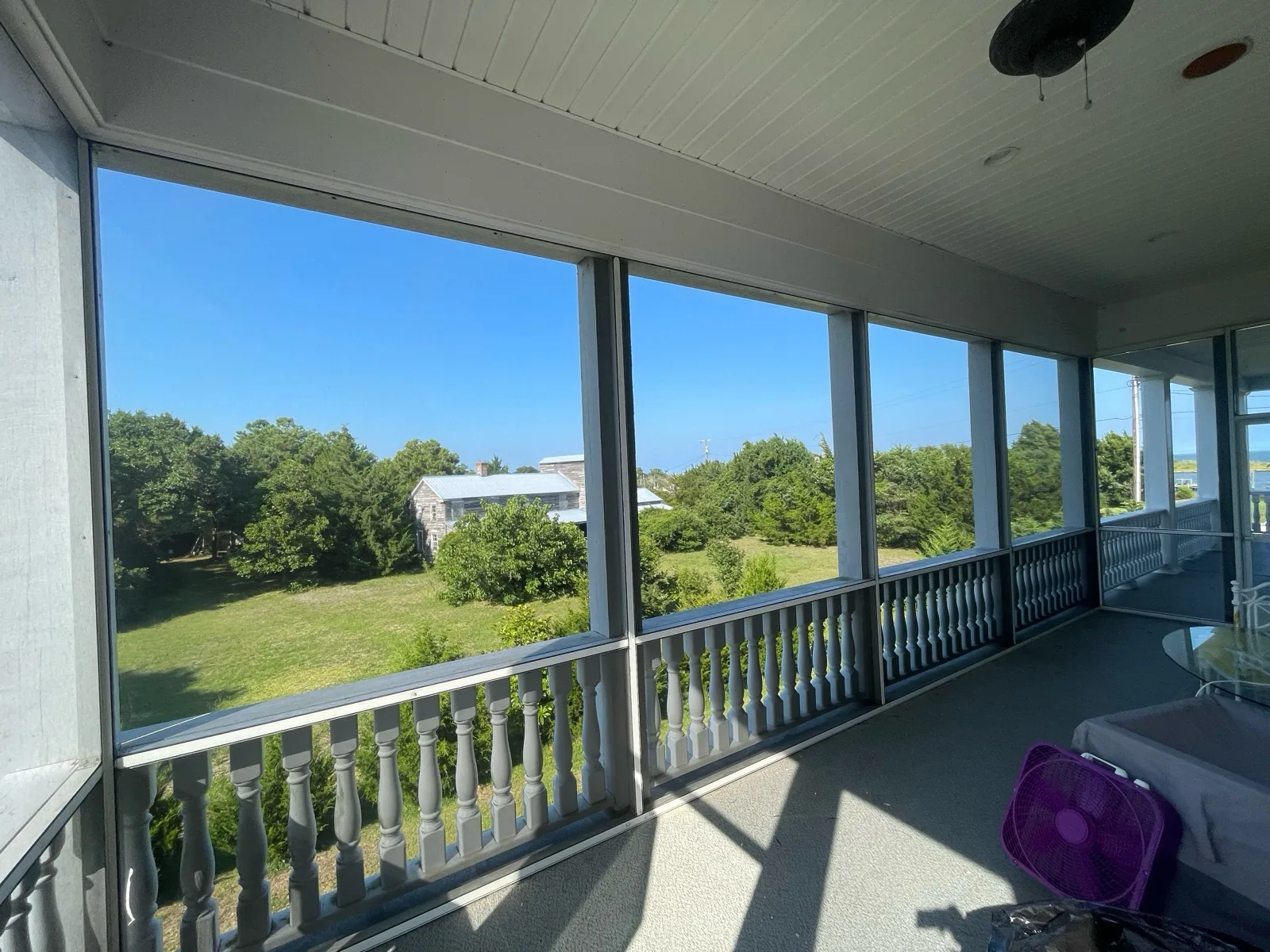
TuffScreen No-See-Um combines a tighter small-insect weave with vinyl-coated polyester construction. It is black, thinner than ordinary TuffScreen in Best Screens’ field comparison, and designed for customers who need more durability than standard 20×20 fiberglass without giving up protection from most tiny insects.
The tight weave increases insect protection and some privacy, but it is less open than standard porch screen. Customers should see and feel a sample when airflow and outward visibility are major priorities.
PetScreen for dogs, cats, and the toughest wear areas
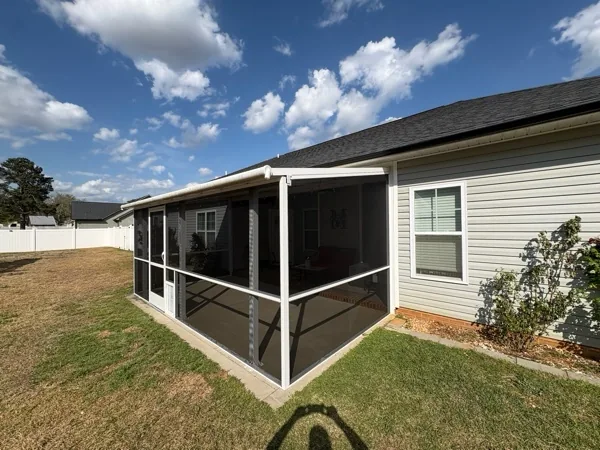
PetScreen is a thick, black, vinyl-coated polyester mesh that resists tears and punctures caused by most dogs and cats. Best Screens describes it as approximately seven times stronger than ordinary fiberglass based on Phifer product literature. It is also useful in other high-wear locations where pushing or abrasion is expected.
PetScreen is not indestructible and should not be described as pet-proof. A determined animal may still damage the mesh, pull it from an unsuitable retention system, damage a door, or harm itself. The opening, frame, spline or cap, and attachment method must all be capable of supporting the heavier fabric.
The practical tradeoffs are thickness, visibility, airflow, weight, and cost. A homeowner who needs modest added durability may prefer TuffScreen; a homeowner whose main risk is active dogs or cats should normally start with PetScreen.
SunTex 80 and SunTex 90 for shade and daytime privacy
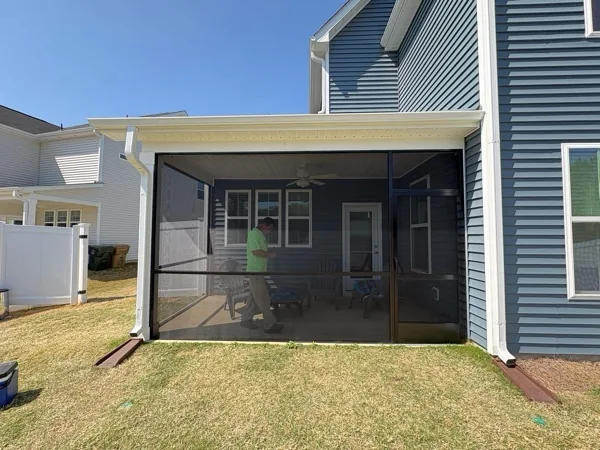
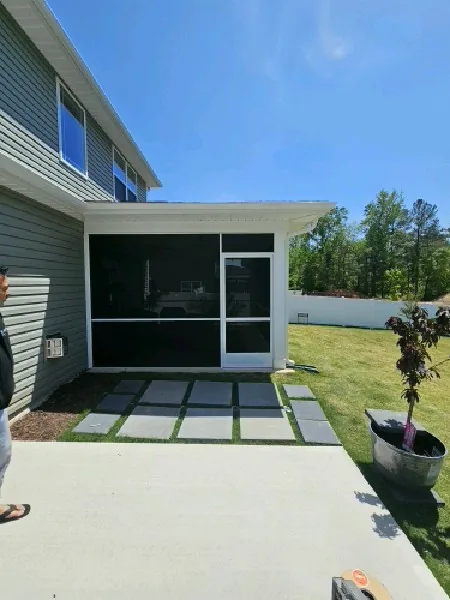
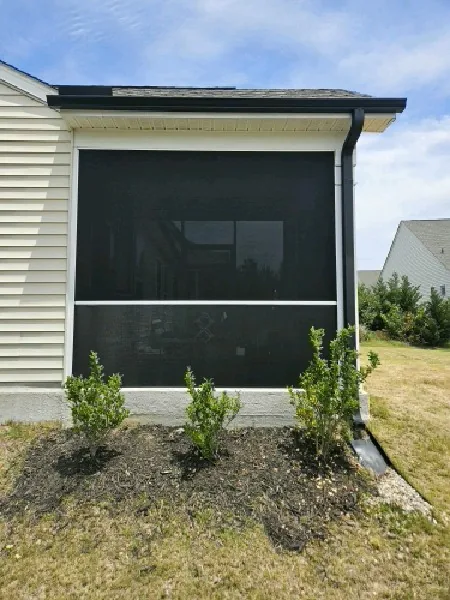
SunTex is an exterior solar-screen fabric made from strong vinyl-coated polyester. It is much denser than ordinary insect screen and is used when reducing sun, heat, and glare is more important than maximizing breeze. Its density also provides daytime privacy, although lighting conditions can reverse the privacy effect at night when the porch is illuminated.
SunTex 80
SunTex 80 is the more open of the two choices. Phifer publishes an openness factor of approximately 25% and UV blockage of approximately 75% for the current product. It provides meaningful shade and daytime privacy while preserving more airflow than SunTex 90.
SunTex 90
SunTex 90 is denser, with a published openness factor of approximately 10% and UV blockage of approximately 90%. It provides stronger shade and daytime privacy, but that density produces a significant airflow tradeoff.
Best Screens has had customers complain about airflow through SunTex 90. Smoke and other odors may linger because SunTex 90 substantially reduces airflow. For an occupied porch, Best Screens should discuss SunTex 80 first unless the customer clearly prioritizes maximum shade or privacy and understands the reduced ventilation.
Neither product creates guaranteed privacy. People may be able to see into an illuminated porch after dark, and sightlines vary with lighting, distance, color, and viewing angle.
How to choose by priority
For an ordinary screened porch
Start with standard 18×14 charcoal fiberglass. It offers the conventional balance and is Best Screens’ lowest-cost porch mesh.
For windows
Start with standard 18×16 charcoal fiberglass. Best Screens reserves this thinner, smaller-opening mesh for windows rather than porches.
For no-see-ums and other tiny flying insects
Compare standard 20×20 No-See-Um with TuffScreen No-See-Um. Choose standard 20×20 when small-insect protection and value are primary; consider the polyester TuffScreen version when added durability is also important.
For the clearest view
Compare BetterVue and UltraVue2. BetterVue improves visibility over traditional fiberglass. UltraVue2 is slightly thinner and provides slightly better visibility in Best Screens’ field comparison, but the difference can be hard to see after installation. Neither is a substitute for heavy-duty or pet-resistant mesh.
For children, traffic, or added durability
Start with TuffScreen. It adds substantial tear and puncture resistance without moving all the way to the thickness of PetScreen.
For dogs and cats
Start with PetScreen when clawing, pushing, or repeated pet contact is the main concern. TuffScreen may be sufficient for lighter wear, but the choice should reflect the animal’s behavior and the retention system.
For sun, glare, and daytime privacy
Compare SunTex 80 and SunTex 90 using physical samples. SunTex 80 is the more balanced porch choice when airflow still matters. SunTex 90 is for customers who accept substantially less airflow in exchange for denser shade and privacy.
Can different meshes be used on the same porch?
Yes. Best Screens will mix meshes when that best fits the customer's priorities, although most customers prefer one fabric because different meshes can create an inconsistent appearance.
A split design can be useful on a porch with lower and upper sections. A family with pets or children may choose TuffScreen or PetScreen below the rail, where contact and abuse are more likely, then use a clearer screen above the rail, where people look outward most often. Depending on the insect problem, that upper screen might be 18×14, BetterVue, UltraVue2, standard 20×20, or TuffScreen No-See-Um.
Another option is SunTex on the side exposed to harsh sun or a nearby neighbor, with a more transparent mesh on the remaining walls. Customers should understand that light entering through the clearer walls can reduce the apparent privacy created by the solar-screen wall. Shade and privacy are whole-space effects, not independent promises for one panel.
Mixing fabrics also changes color, outward appearance, light, airflow, and sightlines from wall to wall. Best Screens evaluates the combination as one enclosure design rather than treating each opening independently.
Compatibility, spline, and heavy-screen cautions
Best Screens can adapt most of these meshes to most of its screening systems, but thicker and heavier fabrics require more care.
- Staples and trim: PetScreen, SunTex 80, and SunTex 90 are not recommended. Their extra weight increases the risk of sagging or pulling staples from the wood, especially because stapled screening generally cannot be tensioned as tightly as other methods.
- SCREENEZE: The manufacturer does not recommend the thickest fabrics for every application. Best Screens has installed heavy screens in SCREENEZE, but each opening must be evaluated and the work should not be presented as a blanket manufacturer-approved combination.
- Screen Tight: Best Screens does not install PetScreen, SunTex 80, or SunTex 90 in original Screen Tight. Forcing thick material and spline into the groove can crack the plastic base.
- Standard extruded aluminum: Heavy fabrics can be more difficult to install, but Best Screens uses smaller flat spline to match the fabric. Typical working sizes are .315 for 18×14, BetterVue, UltraVue2, and standard 20×20; .305 for TuffScreen and TuffScreen No-See-Um; and .295 or .285 for PetScreen, SunTex 80, and SunTex 90.
- Removable 7/16-inch rolled-aluminum panels: Best Screens normally uses .150 round spline for the thinner meshes and .140 round spline for thicker meshes such as PetScreen, SunTex 80, and SunTex 90.
Spline selection is a Best Screens working practice, not a universal specification. Groove dimensions, extrusion tolerances, fabric thickness, opening size, weather, and the condition of existing materials can require a different choice. The installer should use the spline that secures the fabric without damaging the frame, base, or mesh.
What darker mesh does—and does not—do
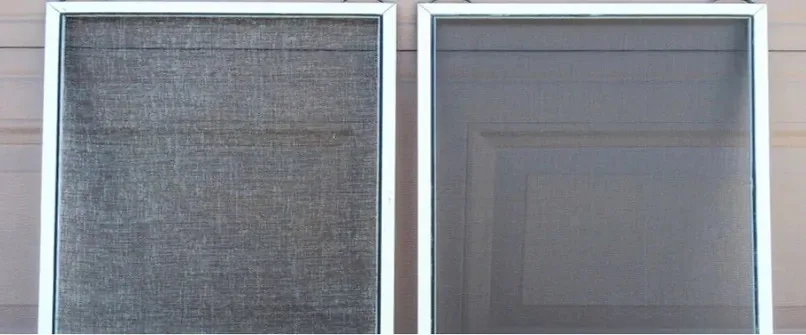
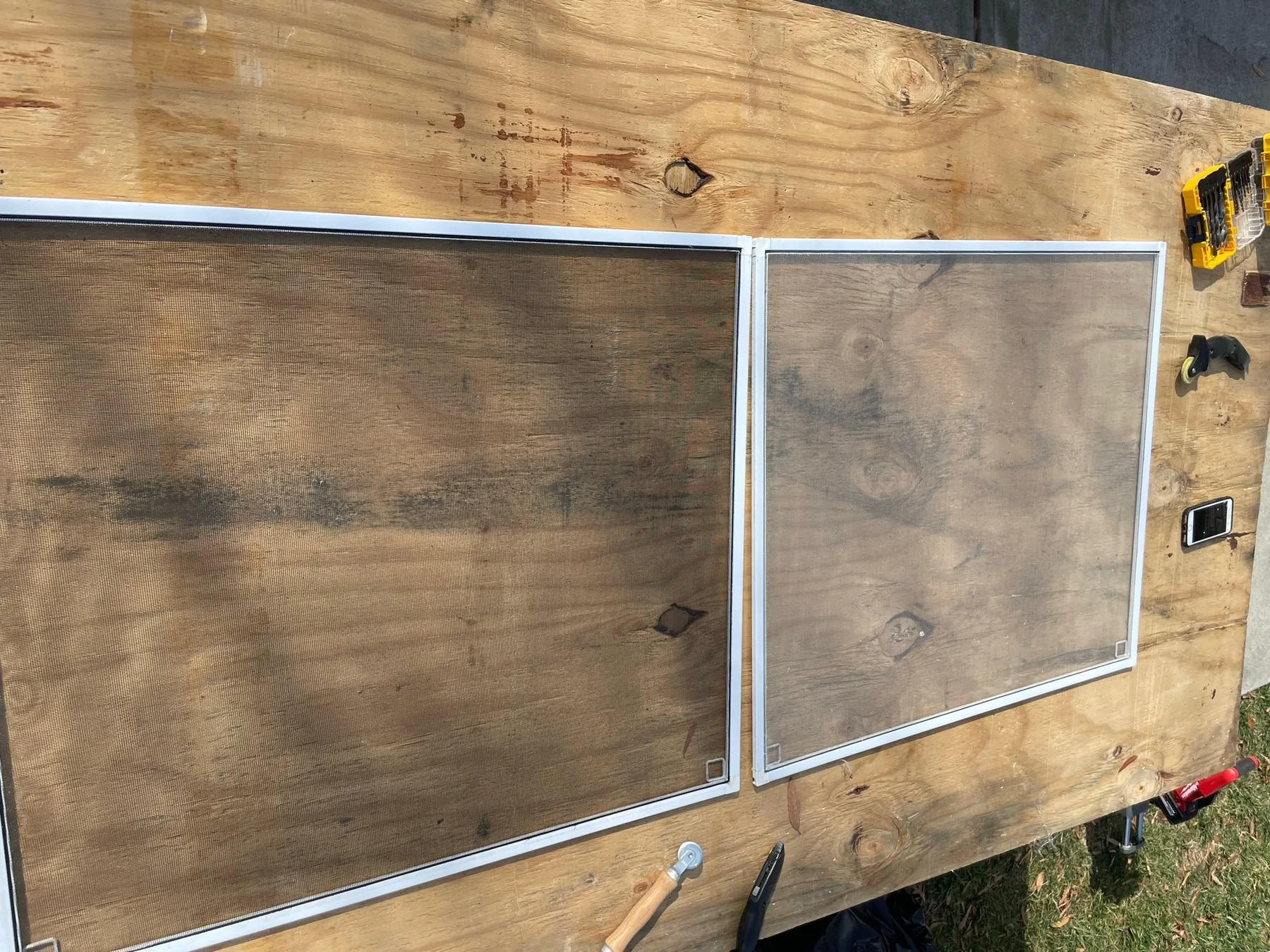
Black and charcoal meshes often appear less visually prominent when looking through them, especially when the viewer is on the brighter side looking toward a darker background. That is one reason BetterVue and UltraVue2 use black fabric.
Color alone does not determine visibility. Strand thickness, weave, openness, tension, lighting, background, distance, and cleanliness all matter. A dense black solar screen provides more shade and privacy but cannot offer the same openness as a fine black visibility screen.
Cleaning and pressure washing
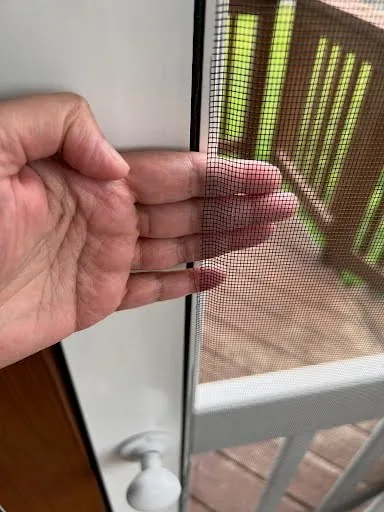
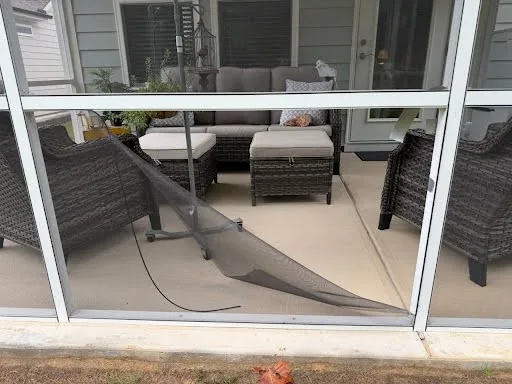
Phifer recommends cleaning screens about once a year and more often when they receive frequent wind, rain, dust, or other heavy exposure. Screen mesh should be cleaned gently. Lightly rinse loose debris with a garden hose, then use lukewarm water, a few drops of mild dish soap, and a soft-bristle brush or sponge. Rinse away the soap using light hose pressure and allow the screen to dry thoroughly. Avoid hard brushes, harsh chemicals, abrasive tools, and concentrated pressure that can stretch, cut, detach, or distort the mesh.
Do not aim a pressure washer directly at installed screen fabric. On wood porches with removable panels, remove the panels before power washing, painting, or staining when practical. Support panels properly during handling and reinstall them only after surfaces and finishes are ready.
Best Screens workmanship warranty and manufacturer material warranties
Best Screens' published quote terms state that work is to be completed in a workmanlike manner according to standard practices and is warranted for one year. The same terms state that materials will be as specified. Alterations or deviations from the quoted specifications may create an additional charge, and work performed by others may void existing warranties.
That one-year workmanship warranty is separate from any material warranty offered by Phifer. Manufacturer coverage varies by mesh and may depend on the exact product, purchase date, proof of purchase, exclusions, and claim procedure. A manufacturer material warranty should not be described as a Best Screens warranty or assumed to cover removal, reinstallation, labor, or consequential costs unless the applicable written terms expressly say so.
Frequently asked questions
Is 20×20 screen always better than 18×14?
No. A 20×20 weave has smaller openings for smaller insects, but 18×14 is more open and is Best Screens’ standard porch choice. The better option depends on the insect problem, airflow, visibility, durability, and installation.
Is 18×16 better than 18×14 because the number is higher?
Not for every use. Best Screens uses 18×16 for window screens and 18×14 for porches because the porch fabric is somewhat heavier and better suited to ordinary porch abuse.
Which is clearer, BetterVue or UltraVue2?
Both are black, view-focused screens with Water Shed Technology. UltraVue2 is slightly thinner and provides slightly better visibility in Best Screens’ field comparison, but the installed difference can be difficult to see. Compare physical samples when choosing between them.
Is TuffScreen the same as PetScreen?
No. Both are vinyl-coated polyester, but they serve different durability levels. TuffScreen is a heavy-duty general-purpose mesh; PetScreen is much thicker and intended for resistance to pet damage.
Does no-see-um screen reduce airflow?
Any tighter weave reduces openness relative to a more open mesh. The practical effect depends on the fabric, wall area, wind, openings, landscaping, and the rest of the enclosure.
Does SunTex provide privacy at night?
Do not rely on it for guaranteed nighttime privacy. Exterior solar fabrics provide stronger daytime privacy when the outside is brighter. Interior lighting after dark can make occupants more visible from outside.
Is SunTex 90 too restrictive for a porch?
It can be. Best Screens has received airflow complaints. Smoke and other odors may linger because SunTex 90 substantially reduces airflow. Choose it only after understanding its density and ventilation tradeoff.
Can the strongest mesh be installed in any system?
No. Thick or stiff fabrics may require different spline, caps, frame profiles, opening sizes, or attachment systems. Compatibility must be checked before quoting or installation.
A practical way to decide
Before requesting an estimate, identify:
- Whether the project is a window, door, existing porch, or new enclosure
- The insects or environmental problem you want to solve
- Whether pets or high traffic contact the screen
- Which walls receive the strongest sun
- How important airflow and the outward view are
- Whether daytime privacy is a priority
- The current framing and screen-retention system
- Opening dimensions and any unusually large spans
Send Best Screens full-project photos plus close views of the screen edges, corners, framing, door, and damaged areas. We can help match the mesh to the opening and installation method.