
Enclosing a screened porch with windows can make it more useful during pollen season, wind, rain and cooler weather—but “porch windows” are not all the same.
Some use clear, flexible poly-vinyl glazing. Others use rigid acrylic or glass. The window frames may be aluminum or rigid vinyl, and the panels may move vertically, slide horizontally or remain fixed. Those differences affect the view, ventilation, maintenance, weight, durability and investment.
Best Screens installs flexible-vinyl, acrylic and glass porch-window systems in the Raleigh area. We work with products from Eze-Breeze, Porch Conversions, Custom Window Systems (CWS) and PGT. We have completed projects using each of the three glazing categories discussed in this guide.
This guide includes links to official manufacturer information where it helps explain a product or material. Options described as available from Best Screens reflect the products and configurations we currently quote; final availability, dimensions and specifications are confirmed for each project.
This comparison will help you understand the options. The right choice still depends on your porch, how you want to use it and the condition of the existing structure.
Planning a porch enclosure? Send Best Screens photos of your porch and tell us what matters most—ventilation, clearer views, weather protection, temperature control or budget. We can evaluate the openings, discuss suitable systems and prepare a project-specific quote.
The short answer
| If your priority is… | Start by considering… | Why |
|---|---|---|
| Maximum ventilation and removable vents | Flexible vinyl | Flexible-vinyl vents can be removed to expose the full screened opening. |
| Covering very tall or wide porch openings | Flexible vinyl | Vertical and horizontal configurations can accommodate substantial openings, subject to the selected model and design. |
| The lowest typical enclosure investment | Flexible vinyl | Among the systems Best Screens installs, flexible vinyl is generally less expensive than acrylic or glass. |
| A rigid pane without the weight of glass | Acrylic | Acrylic is rigid and lightweight, with a different appearance and handling profile than flexible vinyl. |
| The clearest, most familiar window appearance | Glass | Glass usually provides the most conventional residential-window look and strong scratch resistance. |
| More options for Low-E or insulated glazing | Glass | Available glass systems may offer performance packages that flexible vinyl and acrylic do not. |
| A completely unobstructed view | Product-specific design | Frame, meeting-rail and spreader-bar placement can matter as much as glazing material. |
This table is a starting point, not a substitute for evaluating the porch. Opening dimensions, framing, window configuration, doors, code requirements and intended room use can change the recommendation.
First, what do “poly-vinyl” and “poly-glazed” mean?
Customers and manufacturers use several terms for the clear, flexible material found in porch-window systems:
- Flexible vinyl glazing
- Soft vinyl
- Poly-vinyl or polyvinyl
- Poly-glazed or poly-glazing
- Vinyl pane
- Flexible vinyl membrane
In this guide, flexible vinyl glazing is the general category. These terms do not mean the same thing as a conventional vinyl-framed window.
Flexible-vinyl porch windows installed by Best Screens have aluminum frames that hold flexible vents in clear or tinted material. By contrast, a glass window may have an aluminum frame or a rigid-vinyl frame. Acrylic systems may also vary by product; the frame material should be confirmed for the system being quoted.
That distinction matters. “Vinyl” may describe the flexible glazing inside one porch window or the rigid frame surrounding glass in another.
The three porch-window categories
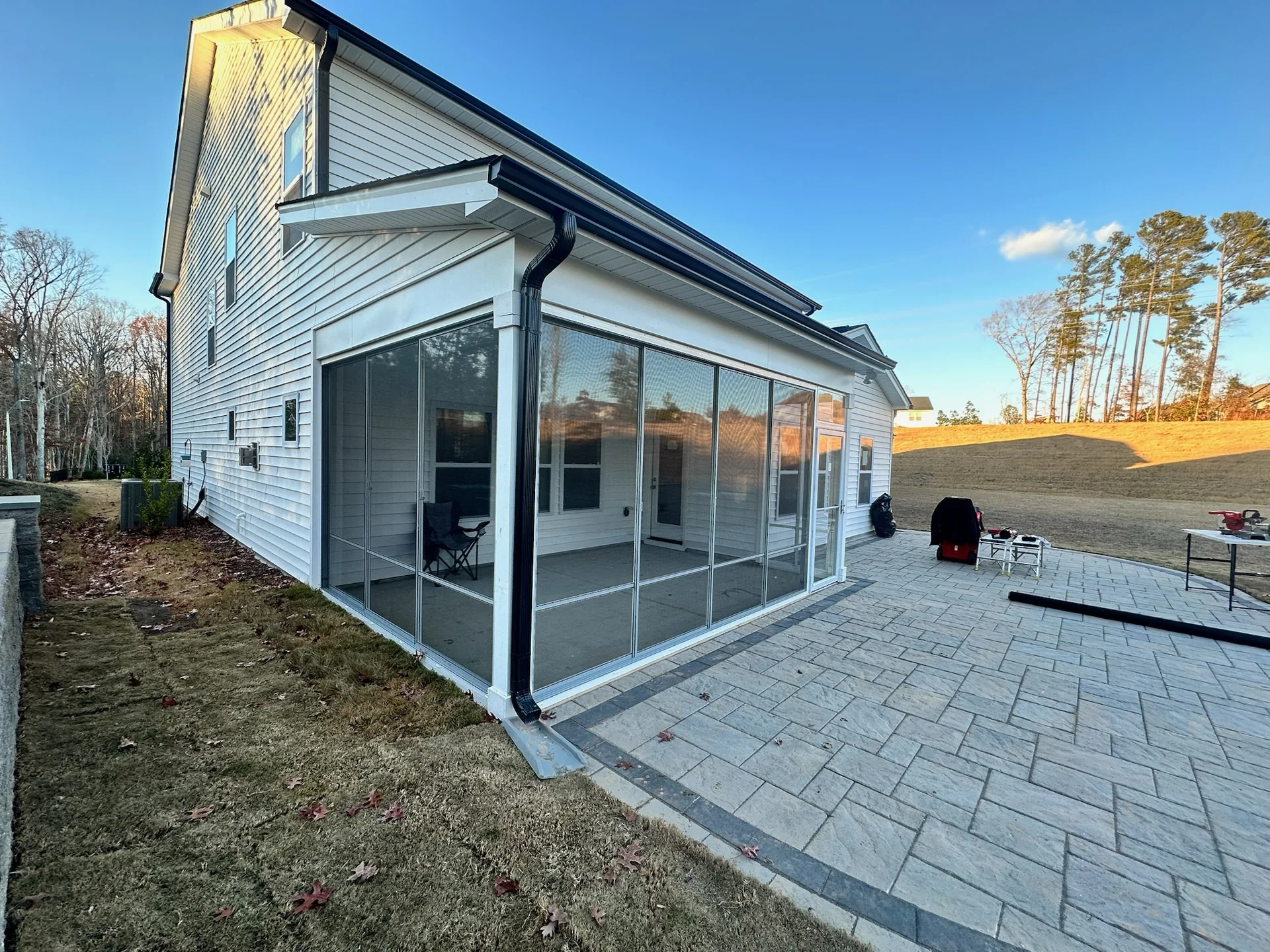
1. Flexible-vinyl porch windows
Flexible vinyl is a clear, lightweight glazing material designed to flex when pushed or impacted and return toward its original shape. It is not glass, and it should not be cleaned or treated like glass.
Best Screens can supply flexible-vinyl systems from:
- Eze-Breeze, including Vertical 4-Track and Horizontal Side Slider configurations
- Porch Conversions, including FlexiGlaze vertical and horizontal configurations
- CWS WeatherLite, including soft-vinyl vertical and soft-vinyl horizontal configurations
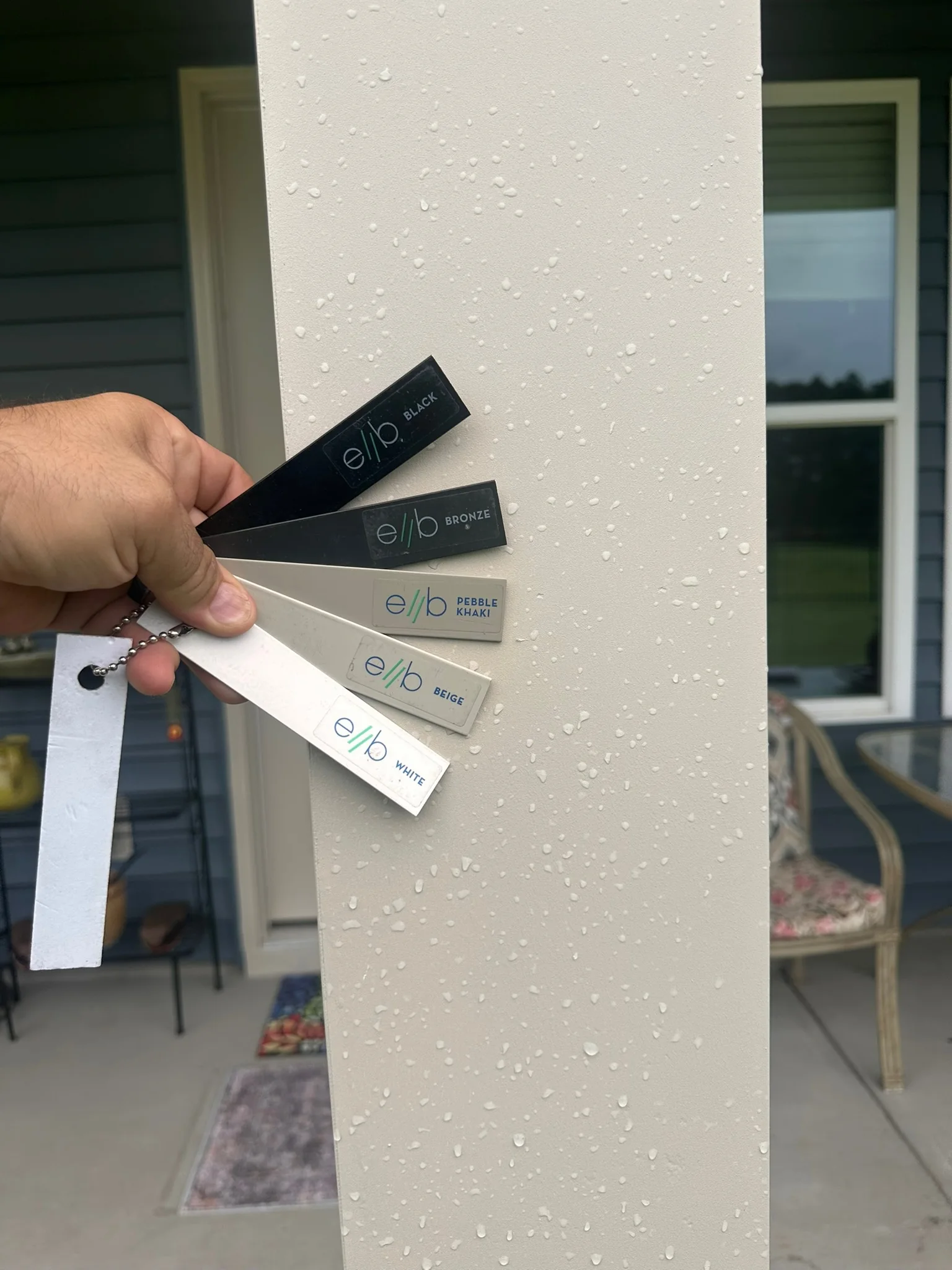
Flexible poly-vinyl glazing is available from Best Screens in clear, smoke gray, dark gray and bronze. For Eze-Breeze systems, aluminum frames are available in white, bronze, black, beige and pebble khaki. Eze-Breeze publishes these frame and vinyl color choices on its official website.
Flexible-vinyl systems are often a strong fit when homeowners want substantial ventilation, protection from much of the wind, rain and pollen, large custom openings and a lower typical investment than acrylic or glass.
Their tradeoffs include a softer surface that requires appropriate cleaning, visible tracks or vent rails, and a less conventional appearance than residential glass windows.
2. Acrylic porch windows
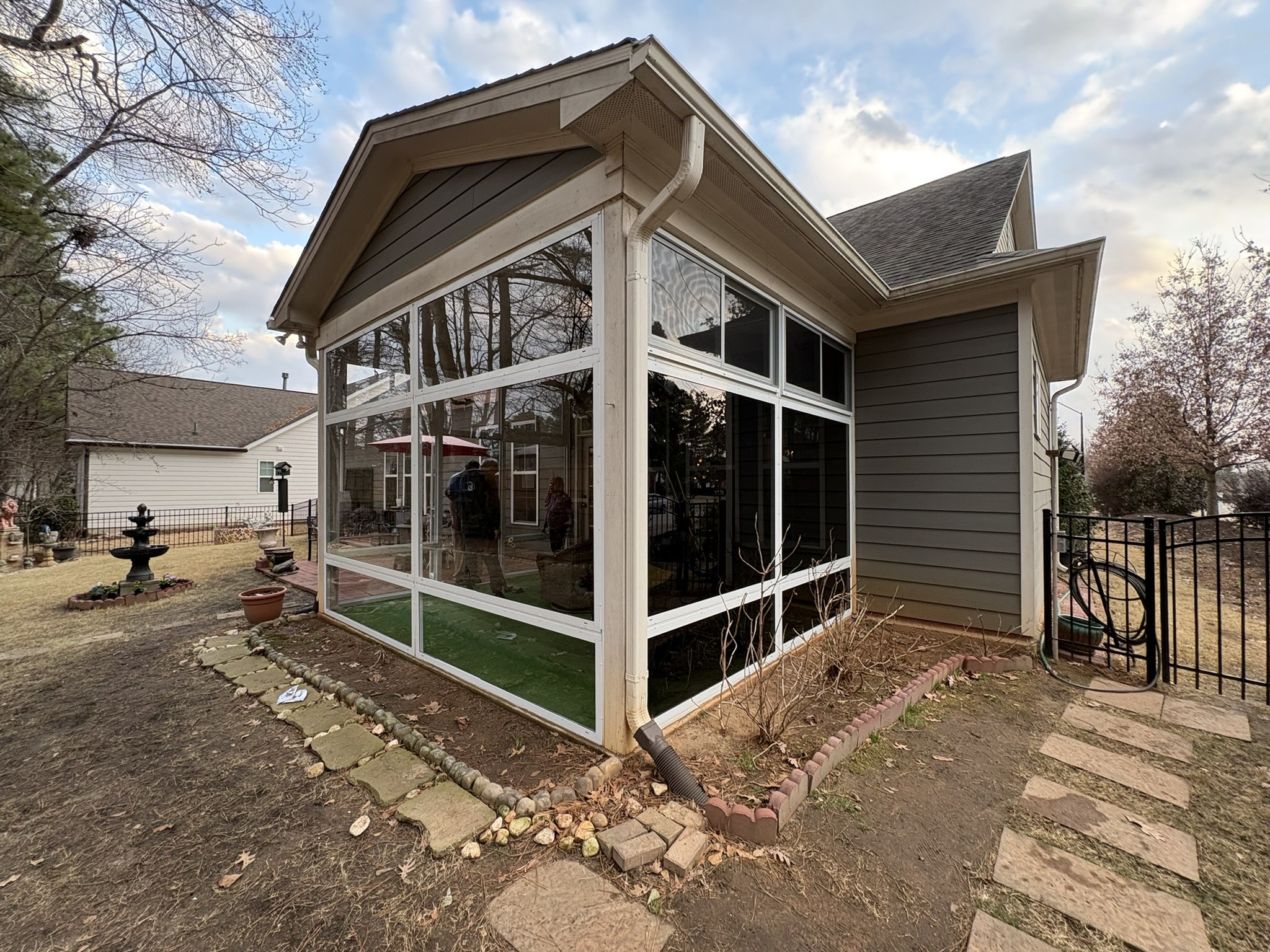
Acrylic is a rigid, lightweight plastic glazing. It does not flex like soft vinyl and is not as heavy as glass. Depending on the selected product, acrylic windows may be available in sliding configurations and with clear or tinted glazing.
Acrylic can occupy a useful middle ground for homeowners who want rigid panes and large areas of light without choosing conventional glass. It can still scratch, so cleaning instructions and long-term care matter.
CWS offers acrylic sunroom-window products, and Best Screens has completed acrylic porch-window projects. The exact glazing thickness, frame material, operating configuration, size limits and available colors should be confirmed for the product included in a quote.
3. Glass porch windows
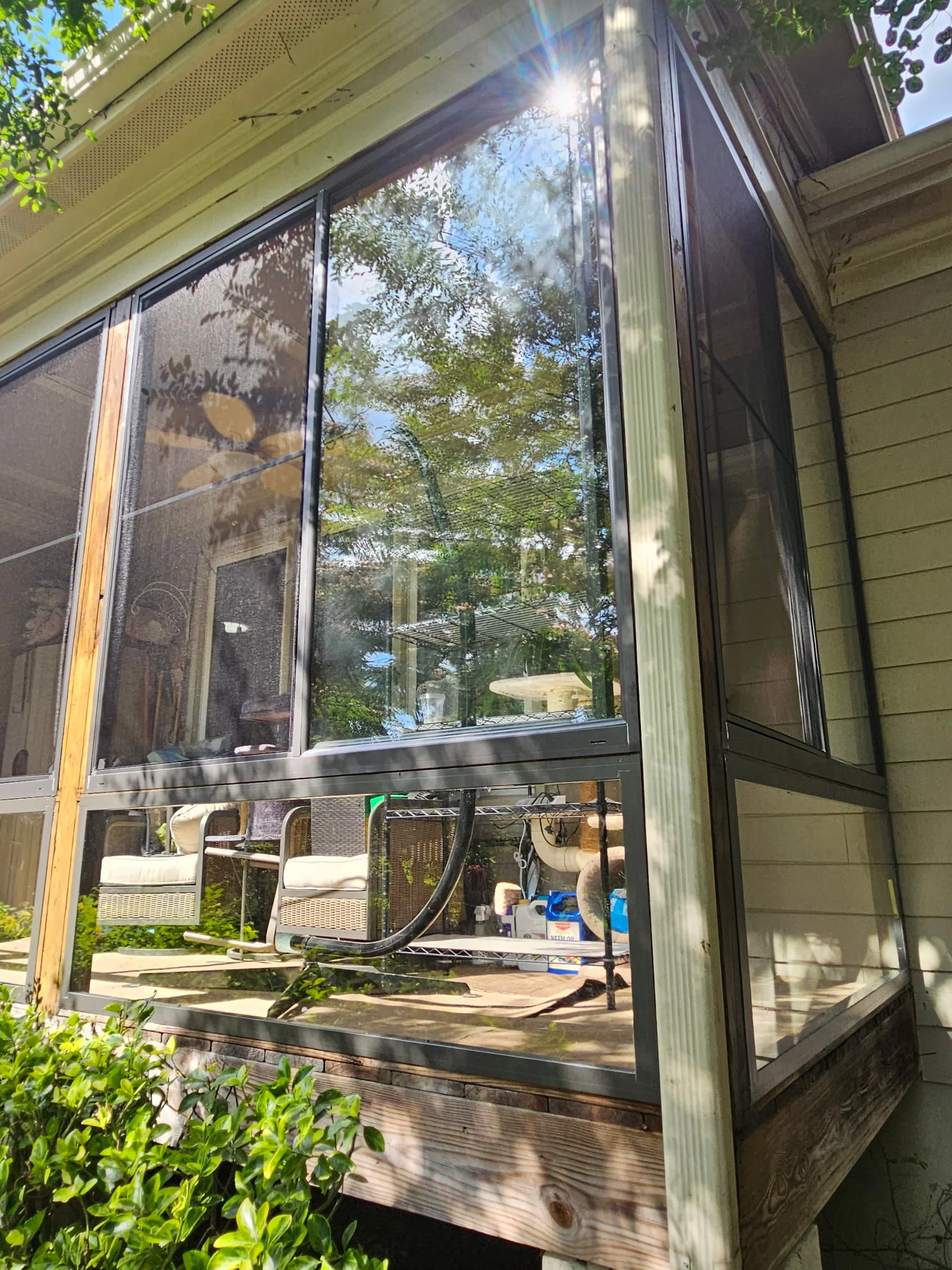
Glass gives a porch the most familiar residential-window appearance. It generally offers excellent clarity and scratch resistance and may be available with Low-E coatings, insulated glass or other performance options, depending on the product.
Best Screens can supply glass window options from CWS and PGT. The glass windows we offer may have aluminum or rigid-vinyl frames. Available frame colors are:
- Aluminum frames: white or bronze
- Rigid-vinyl frames: white
Depending on the selected product and project requirements, Best Screens can offer tempered or non-tempered glass with these glazing choices:
- Single-pane clear glass
- Single-pane tinted glass
- Double-pane insulated clear glass
- Double-pane insulated tinted glass
- Double-pane insulated Low-E glass
The appropriate safety-glass specification is determined for the actual opening and project; tempered and non-tempered glass should not be treated as interchangeable choices in every location.
The standard glass porch windows Best Screens offers are horizontal sliders with one fixed side and one operable side. The fixed and operable sides can be ordered to suit the porch layout. A screen is installed on the operable side; the fixed side does not require a screen because it does not open.
For the CWS and PGT products Best Screens currently offers, aluminum-frame glass sliders can be made up to 74 inches wide by 72 inches high with a 2-inch-deep frame. Rigid-vinyl-frame glass sliders can be made up to 72 inches wide by 72 inches high with a 3 1/4-inch-deep frame. The rigid-vinyl frame offers better thermal performance than the aluminum frame, but it is thicker and is available only with double-pane insulated glass.
CWS and PGT fixed glass panels in aluminum or rigid-vinyl frames can be made up to 36 square feet, subject to the selected series, proportions, glass specification and project requirements. Sliding glass doors can accommodate substantially larger openings; their model-specific size limits will be added after final product verification.
Glass is heavier and usually requires the highest investment of the three categories. The porch framing, openings, support conditions and intended use must be evaluated. Adding glass windows also does not automatically turn a porch into conditioned living space or make it a four-season room.
How the options compare
View and sightlines
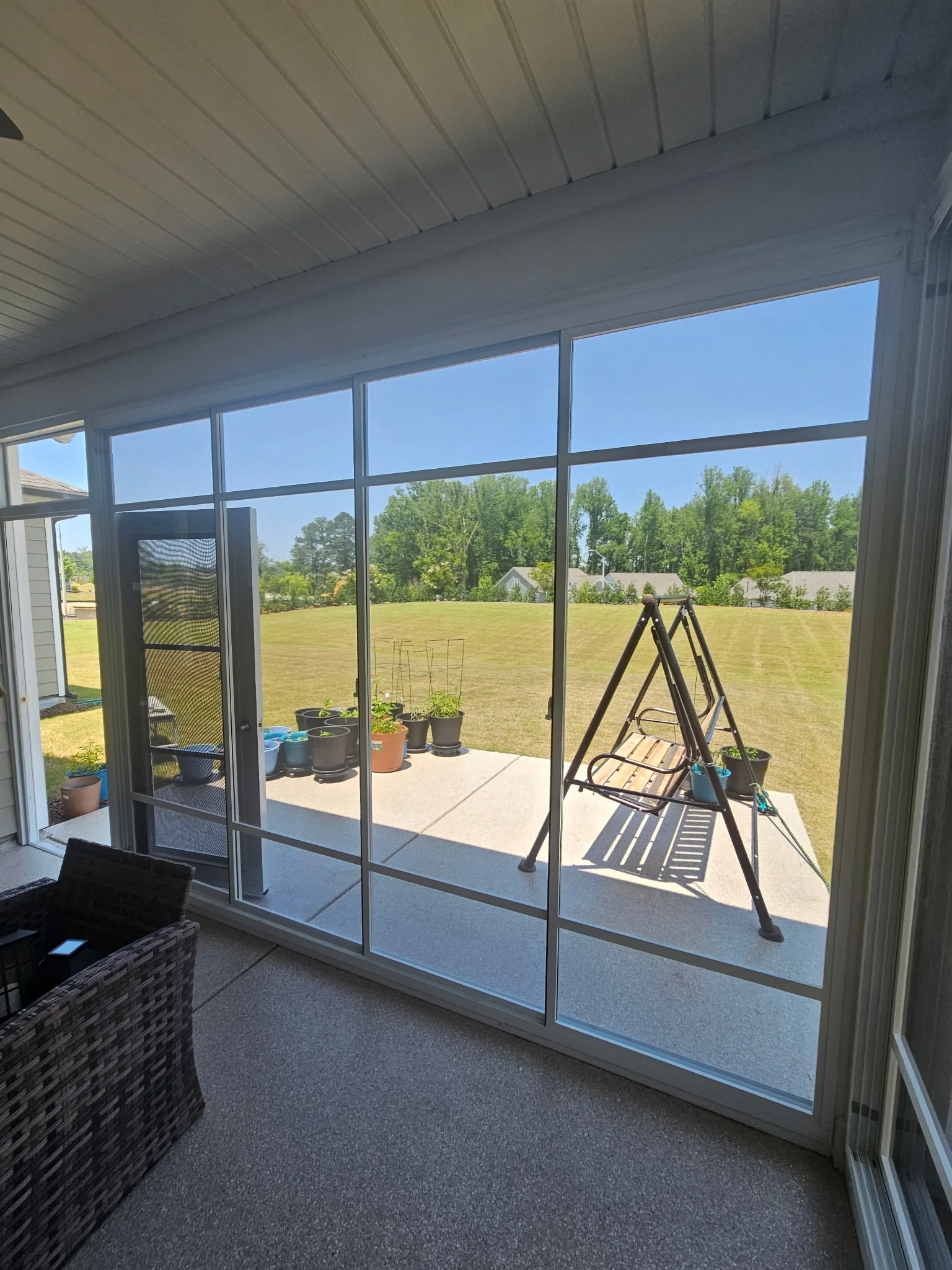
Glazing material is only part of the view. Tracks, meeting rails, individual vent frames, mullions and spreader bars can all cross a homeowner’s sightline.
Glass often provides the clearest, hardest viewing surface. Acrylic can also provide broad light and views but has different optical and scratch characteristics. Flexible vinyl provides clear or tinted views while using multiple operable vents and structural components that may create more visible lines in the opening. Smoke gray, dark gray and bronze flexible-vinyl options change the amount and color of visible light compared with clear glazing.
With Eze-Breeze:
- Vertical sliders have vertical spreader bars.
- Horizontal sliders have horizontal spreader bars.
- On horizontal units, Best Screens can often move the spreader bar higher or lower during design to help keep it away from an important seated or standing view.
The best time to discuss furniture placement, eye level and a favorite outdoor view is before final measurement and manufacturing.
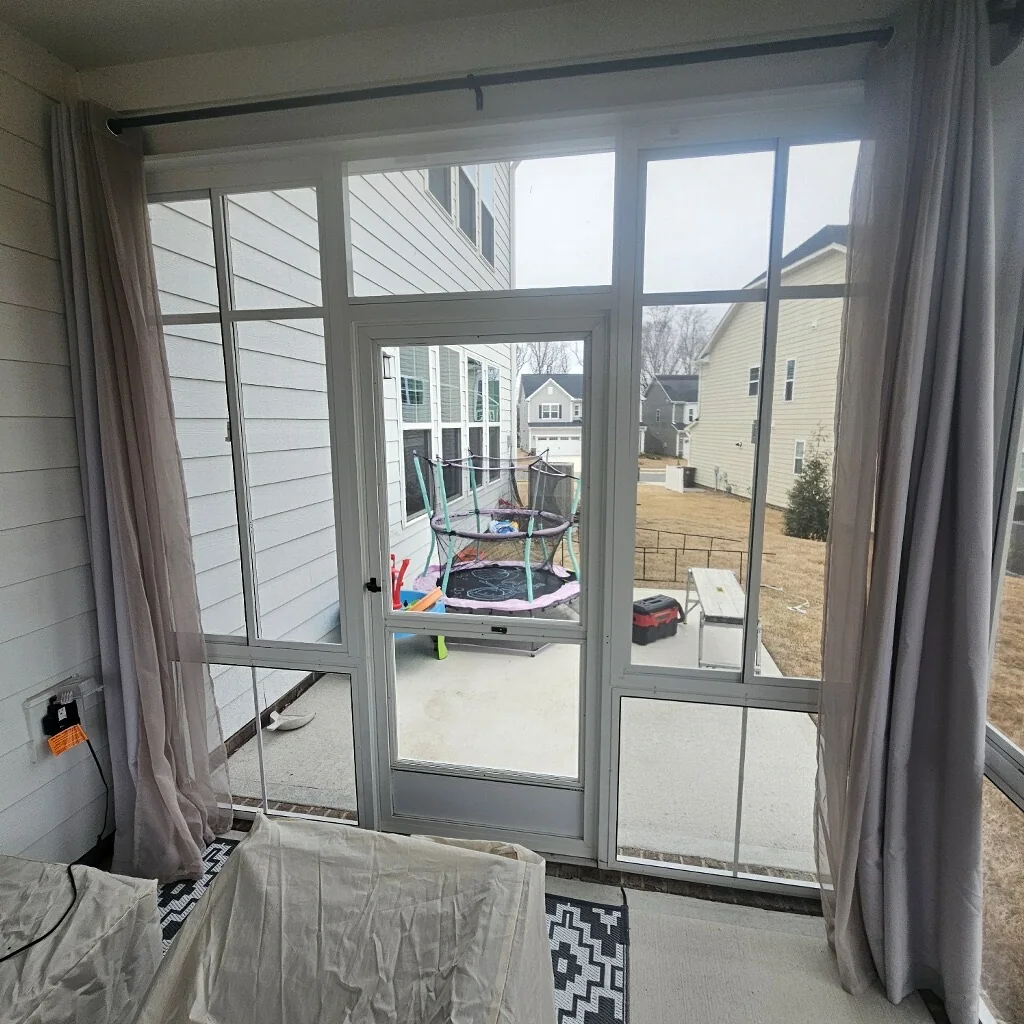
Ventilation and removable vents
Flexible-vinyl systems offer unusually flexible ventilation choices.
For the Eze-Breeze configurations used by Best Screens, including the manufacturer’s Vertical 4-Track and Horizontal Side Slider:
- Vertical 4-Track: The vents move up and down and can provide up to approximately 75% ventilation during normal operation.
- Horizontal 2-track: Two vents slide from side to side and provide approximately 50% ventilation during normal operation.
- Horizontal 4-track with three vents: The configuration can provide up to approximately 66% ventilation.
- Horizontal 4-track with four vents: The configuration can provide up to approximately 75% ventilation.
The flexible-vinyl vents can also be removed. Horizontal vents are generally easier to remove than vertical vents. With every vent removed, the full screened opening is exposed for maximum ventilation, although the insect screen still creates a small amount of airflow resistance.
Acrylic ventilation depends on the exact window style, number of operable panels and how the panels overlap when opened. The horizontal-slider glass windows Best Screens currently offers have one fixed side and one operable, screened side, providing ventilation through the operable portion. The operating direction can be ordered to suit the porch. Do not compare products by the word “slider” alone—compare the actual open area of the proposed configuration.
Opening size and design flexibility
Flexible-vinyl systems can often cover larger individual porch openings than the acrylic or glass products Best Screens commonly uses.
Eze-Breeze’s 4V60 vertical configuration is suited to tall openings. Its SS10/SS30 horizontal configurations can span very wide openings by using additional vents and, at certain dimensions, spliced units. The appropriate limit depends on orientation, vent count, glazing-versus-screen configuration, mounting method and project conditions.
This does not mean that every flexible-vinyl unit is larger than every possible glass or acrylic window. It means the product category can provide valuable design flexibility for porches with unusually tall or wide openings.
For comparison, the horizontal-slider glass porch windows Best Screens currently offers have different limits by frame material. Aluminum-frame CWS and PGT sliders can be up to 74 by 72 inches with 2-inch-deep frames. Rigid-vinyl-frame CWS and PGT sliders can be up to 72 by 72 inches with 3 1/4-inch-deep frames and are available only with double-pane insulated glass. Fixed panels in either frame material can be up to 36 square feet. Sliding glass doors are a separate product category and can span much larger openings; their exact size limits depend on the selected model.
For homeowners, the practical question is:
Can the opening be covered with one well-proportioned unit, or will the design require multiple windows and additional framing?
That answer affects the view, ventilation, appearance and price.
Weather and pollen protection
All three categories can help close a porch against much of the wind, rain and pollen that would pass through ordinary screen mesh. None should be described as making every existing porch airtight, waterproof or automatically climate-controlled.
Performance depends on the product, installation, drainage, seals, existing porch construction and exposure. Wind-driven rain can behave differently from ordinary rainfall, and a porch enclosure must still manage water appropriately.
If pollen is the main concern, ask how often you want to open the windows, where the screens sit and how easily the glazing and tracks can be cleaned.
Temperature and seasonal use
Closing porch windows can reduce drafts and help retain conditioned air compared with an open screened porch. The result is still determined by the entire room—not the windows alone.
Important factors include:
- Roof, wall and floor insulation
- Air leakage
- Solar exposure and shade
- Window area and glazing type
- HVAC or other heating and cooling
- Doors and thresholds
- Existing structural and code conditions
Flexible-vinyl and acrylic enclosures are commonly used to extend the comfortable seasons for a porch. Glass provides the broadest range of glazing packages among the systems Best Screens offers, including single-pane clear or tinted glass and double-pane insulated clear, tinted or Low-E glass. A site evaluation is necessary before promising a particular indoor temperature or calling the space conditioned living area.
Durability, impact and scratching
Each material handles wear differently:
- Flexible vinyl can flex under impact and may return toward its original shape. Its softer surface needs vinyl-safe cleaning methods and protection from scratches or harsh chemicals.
- Acrylic is rigid and lightweight. It will not flex like soft vinyl and can scratch if cleaned with the wrong products or tools.
- Glass has a hard, scratch-resistant surface and familiar cleaning requirements, but it is heavier and can crack or break. Best Screens offers tempered and non-tempered configurations, subject to the selected product and the requirements of the actual opening.
No material is maintenance-free. Follow the care instructions for the actual manufacturer and glazing selected.
Cleaning and maintenance
Before choosing a system, consider not only how the windows operate but also how you will reach both sides of every panel.
Flexible-vinyl vents can be removed for cleaning, with horizontal vents generally easier to remove. Use only manufacturer-approved cleaners and soft materials. Acrylic also requires care to avoid scratching. Glass tolerates conventional window cleaning better, but tracks, screens, seals and hardware still require attention.
Ask Best Screens to demonstrate vent removal and cleaning access when reviewing a proposed system.
Relative investment
Based on the systems Best Screens installs, flexible-vinyl porch windows are generally the lowest-cost option, followed by acrylic, with glass usually requiring the highest investment.
That is a relative comparison—not a price quote. Actual investment changes with:
- Number, width, height and shape of openings
- Vertical, horizontal, fixed or mixed window configurations
- Number of vents and separate units
- Glazing, tint and glass-performance options
- Aluminum or rigid-vinyl frame selection
- Doors, locks and hardware
- Existing framing and preparation work
- Trim and finish requirements
- Access, working height and demolition
- Structural, permit or code requirements
Two porches with similar square footage can require very different work. For a fuller explanation, see What Affects the Cost to Screen or Enclose a Porch in the Raleigh Area?
Which option is right for you?
Flexible vinyl may be the better fit if:
- You want the lowest typical investment of these three categories.
- Maximum ventilation and removable vents are important.
- The porch has very tall or wide openings.
- You want an aluminum-framed enclosure that blocks much of the weather and pollen while retaining screened ventilation.
- You accept visible vent rails or spreader bars and are comfortable using vinyl-safe cleaning methods.
Acrylic may be the better fit if:
- You prefer a rigid pane but want something lighter than glass.
- The available acrylic configuration fits your openings and desired ventilation.
- You understand the material’s cleaning and scratch-care requirements.
- The appearance and investment fit between the flexible-vinyl and glass systems being considered.
Glass may be the better fit if:
- You want a conventional residential-window appearance.
- Clarity and scratch resistance are high priorities.
- You want to explore Low-E, insulated or other available glass packages.
- Your porch and budget can support the heavier, typically higher-investment system.
- You understand that windows alone do not create conditioned living space.
For the glass porch windows Best Screens currently offers, also consider whether the operable sash should be on the left or right, whether a fixed panel better suits an opening, and whether aluminum or rigid-vinyl framing fits the desired appearance and glazing package.
Five questions to answer before requesting a quote
- How do you want to use the porch? Occasional fair-weather use, more months of the year, or a space intended for heating and cooling?
- What matters most? Maximum ventilation, a clearer view, pollen protection, temperature performance or lower investment?
- Which views matter? Show us where people sit and which outdoor sightlines should remain as open as possible.
- How often will you open or remove the vents? The answer may favor a particular operating direction or configuration.
- What already exists? Send photos of the interior, exterior, openings, doors, framing, floor, ceiling and any visible damage or water concerns.
Not sure what to photograph? See What Photos and Information Are Needed for a Best Screens Estimate?
Frequently asked questions
Is Eze-Breeze glass?
No. Eze-Breeze vents use clear, flexible vinyl glazing held in aluminum frames. The material may also be described as poly-vinyl, vinyl pane or poly-glazing. It is different from both rigid acrylic and glass.
Is a vinyl-framed glass window the same as a flexible-vinyl porch window?
No. In a vinyl-framed glass window, “vinyl” describes the rigid window frame. In a flexible-vinyl porch window, it describes the clear, flexible glazing. Flexible-vinyl systems installed by Best Screens use aluminum frames.
Can Eze-Breeze vents be removed for full ventilation?
Yes. The flexible-vinyl vents can be removed, exposing the full screened opening. Horizontal vents are generally easier to remove than vertical vents. The screen remains in place, so it still produces a small amount of airflow resistance.
Do all Eze-Breeze windows provide 75% ventilation?
No. Ventilation depends on the configuration. A horizontal 2-track unit provides approximately 50% during normal operation, while three- and four-vent configurations can provide greater open area. Vertical 4-track units can provide up to approximately 75%.
What colors are available for flexible poly-vinyl glazing and Eze-Breeze frames?
Best Screens offers flexible poly-vinyl glazing in clear, smoke gray, dark gray and bronze. Eze-Breeze aluminum frames are available in white, bronze, black, beige and pebble khaki. See the manufacturer's current Eze-Breeze color options; availability is reconfirmed when the project is quoted.
What glass and frame options does Best Screens offer?
Best Screens offers single-pane clear or tinted glass and double-pane insulated clear, tinted or Low-E glass. Tempered and non-tempered configurations are available, subject to the selected product and the requirements of the opening. Aluminum frames are available in white or bronze, while rigid-vinyl frames are available in white. Rigid-vinyl frames offer better thermal performance, but they are thicker and are available only with double-pane insulated glass.
How do the glass porch windows open?
The glass porch windows Best Screens currently offers are horizontal sliders with one fixed side and one operable side. The operable side can be ordered on the left or right and includes a screen; the fixed side has no screen because it does not open. CWS and PGT aluminum-frame sliders can be up to 74 by 72 inches with 2-inch-deep frames. Their rigid-vinyl-frame sliders can be up to 72 by 72 inches with 3 1/4-inch-deep frames and double-pane insulated glass. Fixed glass panels up to 36 square feet and larger sliding glass doors are also available, subject to the selected series and project requirements.
Will porch windows make my porch a four-season room?
Not by themselves. Comfortable year-round use depends on the glazing, insulation, air sealing, solar exposure, HVAC, doors, floor, roof and applicable building requirements. Best Screens will not promise conditioned living-space performance based only on adding windows.
Is flexible vinyl always cheaper than acrylic or glass?
For the systems Best Screens typically installs, flexible vinyl is generally the lowest-cost of the three categories. An unusual opening, extensive preparation, doors, trim or other project conditions can change the total. A project-specific quote is the only reliable price.
Which brands can Best Screens provide?
Best Screens can provide flexible-vinyl, acrylic and glass options from manufacturers that include Eze-Breeze, Porch Conversions, CWS and PGT. Availability and the right product depend on the project; not every manufacturer offers every glazing category.
Compare the porch—not just the product name
There is no single best porch window for every home.
A flexible-vinyl system may offer the ventilation, opening size and investment you want. Acrylic may provide the right balance of rigid glazing and lower weight. Glass may deliver the conventional appearance and glazing choices that matter most to you.
The strongest design starts by separating five decisions:
- Glazing material
- Frame material
- Vertical or horizontal operation
- Vent count and open area
- Opening size and existing porch conditions
Best Screens can compare those decisions using completed local projects in all three categories—not just manufacturer samples.
Ready to compare options for your porch? Send Best Screens a few photos and describe how you want to use the space. We will review the openings, explain suitable flexible-vinyl, acrylic and glass options, and prepare a quote based on your actual porch.
Manufacturer information and further reading
These official manufacturer links support the product categories and specifications explained in this guide. Best Screens-specific options, ordering choices and size limits are confirmed in each project quote.
- Eze-Breeze Vertical 4-Track
- Eze-Breeze Horizontal Side Slider
- Eze-Breeze colors, sizes and frequently asked questions
- CWS glass, acrylic and soft-vinyl sunroom-window overview
- CWS soft-vinyl vertical sliding sunroom windows
- CWS soft-vinyl horizontal sliding sunroom windows
- CWS acrylic sliding sunroom windows
- CWS glass sliding sunroom windows
- Porch Conversions
- Porch Conversions product sheets
- PGT horizontal roller windows
- Best Screens-supplied Eze-Breeze 4V60, SS10/SS30 and LF20 sizing chart (PDF)